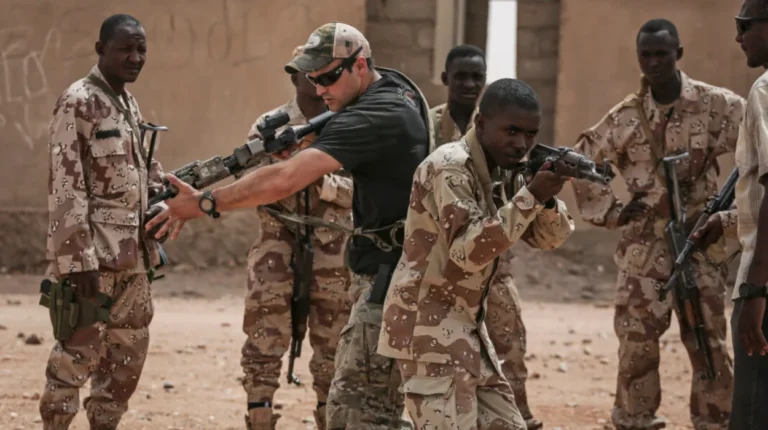
With the successful collapse of the G5 Sahel Joint Force in 2025, structural change in the West African security architecture became a turning point. The loss of ECOWAS by Burkina Faso, Mali and Niger to the Alliance of Sahel States, meant that regional counterterror coordination was fractured at a very timely time. The fall was not merely a weakening of institutional structures; in fact, it opened up new avenues of operations of jihadist groups that already existed within the porous borders of the Sahel.
The aftereffects of this break were felt as early as 2025 through the drift southward of violence. Organizations like Jama-at Nusrat al-Islam wal-Muslimin (JNIM) and the Islamic State Sahel Province (ISSP) spread their activities towards West Africa to its coast. The loss of the joint patrol processes and intelligence-sharing systems exposed states such as Benin and Nigeria to spillover processes that used to be held back in the farther north.
Fragmentation Of Regional Security Architecture
Breaking up of coordinated Sahel security mechanisms resulted in a fractured response front as opposed to a single front. States that used to adhere to G5 models were compelled to enter bilateral or unilateral security arrangements that are usually not interoperable. This disintegration increased the speed of adaptation and migration of armed groups towards the south.
Rise Of Coastal Exposure Zones
Benin and Nigeria became more and more a frontline state and no longer peripheral onlookers. Borderlands, which were historically zones of buffer, became dynamic zones of conflict and changed national security priorities, making a quick re-setting of defense postures imperative.
Escalating Violence Across Benin Nigeria Frontier Regions
The security situation on the Benin-Nigeria border worsened greatly until 2025. The JNIM-linked attacks increased by about 86 percent, according to ACLED data, as the number of attacks rose to about 280 in 2025, as compared to 150 attacks in 2024. Such an increase was not just quantitative, but also geographical in nature with activities going deeper into the coastal areas.
The extent of this expansion was in the civilian deaths. The number of deaths rose by almost 260 percent reaching more than 1,000 in Nigeria in the main border states Sokoto, Kebbi, Niger, and Kwara, and the Alibori and Borgou regions of Benin. These numbers reflect the shift between a few instances of insurgency to an ongoing cross-border pressure.
JNIM Operational Expansion Patterns
The 2025 development of JNIM proved to be more logistical advanced. One of the most striking attacks in Djibo, Burkina Faso, proved to be a big military attack, which indicated that the group is capable of organizing the major operations. In late October 2025, JNIM spread to Kwara State in Nigeria, the first state where the group has been confirmed to be active towards the Benin border.
Intensifying Competition With ISSP
The competition between JNIM and ISSP also unsteadied the region. Both parties were involved in apparent operational upsurge to determine territorial supremacy, especially in tri-border areas. The data of ACLED indicated that there was a 262 percent increase in violence in these conflict regions in the second half of 2025 and the end of 2025, as a sign of competitive militarization of border routes.
Formation Of The Benin Nigeria Border Pact
It is in this context of the growing insecurity that Benin and Nigeria established a coordinated border security framework at the highest level of discussion, in Cotonou, at the first of 2026. The agreement involves combining patrols, sharing of intelligence and more effective cross-border surveillance mechanisms to seal the gaps caused by the failure of Sahel-wide coordination.
There was also the presence of French observers during the initial consultations and this indicated the possible external technical assistance in terms of surveillance and logistics. The consensus symbolizes a change in individual national reactions into combined operation planning in a high-risk border.
Joint Patrol Architecture And Operational Design
The essence of the agreement is to coordinate the deployment of the patrol on the areas of vulnerability. The model has focused on real-time coordination to monitor and intercept insurgent movements instead of having independent national patrols. This will be done to minimize the time taken to respond to attacks in jurisdictions where armed forces take advantage of gaps in jurisdiction.
Intelligence Sharing And Network Mapping
The development of common intelligence platforms is one of the main aspects of the deal. The purpose of these systems is to chart jihadist networks that are active in both nations and especially those associated with JNIM and ISSP. The previous experience of counterinsurgency and the growing vulnerability to Sahel spillover conditions in Nigeria and Benin make the country complementary operational needs.
Regional Realignment And Coastal Security Pressures
The break-up of ECOWAS-Sahel relations has precipitated a wider realignment of the states of West Africa coasts. The recent bilateral security arrangements have become a priority of countries like Benin, Togo, and Cote d’ Ivory as instability has been on the rise in the other Sahel regions.
Another critical turning point was the JNIM attack on a Beninese military base in April 2025 when there were significant casualties, highlighting the imminent danger to coastal sovereignty. Such an incident strengthened the need to have collaborative border defense mechanisms.
Coastal States As Frontline Actors
West African states along the coast no longer play periphery roles in the security of the Sahel. Rather, they serve as key areas of containment of insurgent growth. This change has completely changed this pattern in the priorities of defence planning especially the ability to detect the border and the capability to respond promptly.
Regional Fragmentation And ECOWAS Limitations
Although ECOWAS is still a proponent of coordinated reactions, it has not been effective in its operations due to the lack of major Sahel states. This has promoted other security architectures which are usually bilateral in nature to address the ensuing vacuum.
Operational Challenges And Structural Constraints
Although strategic, the Benin-Nigeria Border Pact has a lot of implementation issues. Topography of the border areas like Alibori and Sokoto gives the insurgents an inherent mobility edge, which makes it hard to carry out long-term surveillance. Moreover, the logistic cost of having synchronized patrols in large and un-civilized regions is still high.
Political conformity is also a limitation. The tri-border complication that comes with Nigeria joining the Alliance of Sahel States can restrict the continuity of intelligence between the neighboring jurisdictions. These regional differences make it less likely to have smooth regional coordination.
Resource And Capacity Limitations
Manpower, funding and technological infrastructure are limited in the two countries. Although combined efforts enhance effectiveness, sustainability in the long-term requires regular investments and external assistance. Otherwise, the benefits of operations can be local and short-term.
Environmental And Socioeconomic Drivers
Beyond military factors, environmental stressors such as climate variability and food insecurity continue to contribute to recruitment vulnerabilities. These conditions provide non-state actors with recruitment pathways that cannot be addressed through security measures alone.
Strategic Outlook For Bilateral Security Cooperation
The Benin-Nigeria Border Pact represents a pragmatic response to the fragmentation of regional security governance. By shifting toward bilateral coordination, both states are attempting to compensate for the collapse of broader multilateral frameworks. However, the effectiveness of this model will depend on its ability to adapt to evolving insurgent tactics and sustained regional instability.
The integration of intelligence-sharing and joint patrols marks a significant operational shift, but it also highlights the limitations of patchwork security arrangements in a rapidly evolving conflict environment. As jihadist groups continue to exploit fragmented governance structures, the durability of such bilateral frameworks remains an open question shaped by both political cohesion and operational resilience.
What remains uncertain is whether this model will evolve into a broader coastal alliance capable of containing Sahel spillover, or whether it will remain a localized response tested continuously by the expanding geography of insurgent mobility.