In his short yet powerful post on Truth Social, President Donald Trump states that Abu-Bilal al-Minuki, the global deputy of the Islamic State, has been successfully eliminated in a combined military raid performed by both American and Nigerian forces. This statement casts the mission as the elimination of a “global terrorist,” who was marked by the United States government in 2023, emphasizing the heightened focus on combating terrorism in a government that has consistently promised to destroy the ISIS network globally.
Although Trump’s statement did not include any technically military information, it still holds a symbolic value since it shows that this mission is a direct continuation of his previously mentioned “maximum pressure” policy against ISIS. As for the latter, it has changed its locations from Mosul and Raqqa to West Africa and the Sahel region. With his mention of the Nigerian soldiers and his use of the word “flawless,” he tries to send a message of international collaboration and impeccable execution of the mission amid the threats of terrorist financing and sanctuaries.
Who Abu‑Bilal al‑Minuki was and why his death matters
According to the reports that have been reported publicly since Trump made his statement, Abu-Bilal Al-Minuki has been known as one of the highest-ranking members of ISIS globally, who is sometimes called the “second-in-command” in the organization’s global leadership chain. If this is indeed the case according to the investigations conducted by the U.S. and Nigeria, then he was right under the top leadership structure.
Based on various news reports, the United States officially designated al-Minuki as a “global terrorist” in 2023 through domestic anti-terrorism legislation, which normally involves the imposition of sanctions, freezing of assets, and restrictions on travel, among others. This suggests that intelligence services had already considered him as an important coordinator rather than just a regional leader, with his activities ranging beyond the traditional Middle Eastern ISIS branch to include affiliates in Africa and even Europe.
From the perspective of ISIS’s general development, the reported killing of an individual presented as the deputy worldwide of the terrorist group would be considered as a serious blow to its command and control system, particularly if the individual had been engaged in communication activities among ISIS units located in Syria-Iraq, Sahel, and the Lake Chad region of Nigeria. It is generally believed that the killing of influential personalities cannot annihilate ideologies, although it may cause problems in succession planning, weaken chain-of-command systems, and allow security forces to make tactical adjustments in unstable regions.
The reported US‑Nigeria joint operation
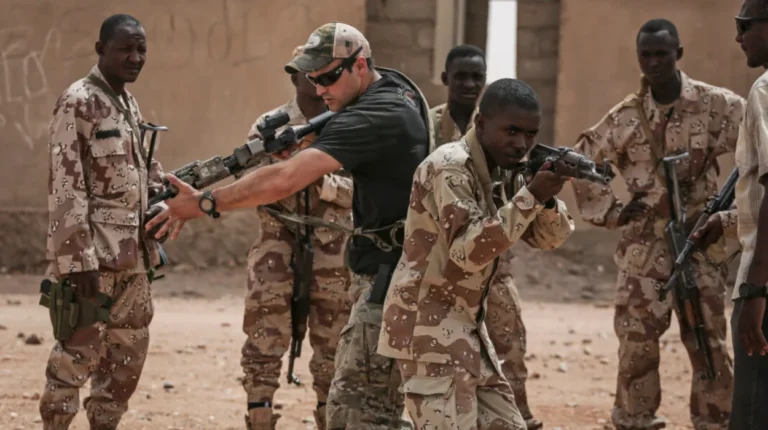
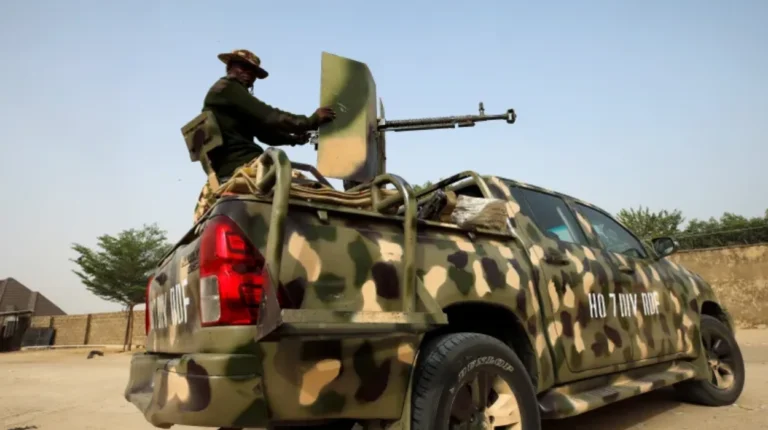
Trump’s post describes the operation as a joint effort between U.S. forces and the Nigerian military, an arrangement that reflects the deepening security partnership between Washington and Abuja in recent years. While the president did not specify the exact date, location, or force composition, multiple news outlets summarizing the claim note that the strike targeted a senior ISIS militant leader operating in Nigeria’s conflict‑prone north‑east, where the so‑called Islamic State West Africa Province (ISWAP) has waged a brutal insurgency.
The Nigerian Defense Headquarters has traditionally remained discreet on matters of joint military operations, generally confining itself to saying that joint activities with international partners have reduced “wanted terrorist elements,” but not revealing any more details. From past experience of working together with Americans and other international allies, Nigerian authorities had claimed success in taking out top-ranking members of ISWAP and Boko Haram groups. This precedent, if applied to the current situation regarding al-Minuki, would give it legitimacy in a larger fight against insurgency.
The geographic rationale behind the alleged raid certainly fits in with the larger U.S. and Nigerian security strategies as well. Lake Chad has been a refuge for jihadist groups since a long time back because of the weak presence of the government, porous borders, and the lack of proper border management. Through his statement about a “global ISIS” leader’s death, Trump makes sure to signal the world that the scope of American counter-terrorism strategy now extends far beyond the traditional battlegrounds of warfare into the realms of intra-African terrorism.
Official confirmations and lingering questions
While Trump’s statement is powerful, the official confirmation of al-Minuki’s death is a matter of high importance. As at the time of writing, many leading media houses have been able to report this news by mainly relying on Trump’s social media statement, together with the background information already provided regarding his inclusion in the 2023 list. The way in which this news has been reported poses several concerns with regard to the evidence behind the news.
In prior counter-terrorism efforts against high-profile targets, U.S. and allied governments would always provide further details, such as detailed reports containing timestamps of intelligence and statements from after the operation, or information on forensics verification, before pronouncing that a kill had been achieved. The lack of such information, so far, raises some questions, particularly because, in an atmosphere of competition or contestation, other entities may seek to refute such claims.
Further, the operational details provided in the post made by Trump are relatively concise. For instance, there is no elaboration on the process used to track down and identify the targeted individual, or the conditions that led to the decision to conduct such an operation. In the event that the relevant authorities do not clarify on these matters, security agencies and human rights groups will continue to be skeptical about the issue.
Strategic implications for ISIS and regional security
Assuming that the allegation about al-Minuki’s death is true, the immediate effect would probably not be seen on the activities of ISIS on the ground; however, it could have an effect on ISIS’s hierarchy and its command structures. As analysts normally point out, the killing of any top commander can be disruptive for some time; however, it does nothing to address the root causes of recruitment into organizations such as ISIS.
However, the attempt to assassinate the commander referred to as the second-in-command of the world will make the ISIS groups feel insecure because they are under the threat that even their leaders will not be safe in any part of the world. It may encourage regional states to continue collaborating militarily with the US if Abuja shows its achievements in eliminating the terrorist networks to its citizens, who are tired of the years of insurgencies.
On the other hand, jihad groups are known to capitalize on such moments, portraying them as instances of martyrdom and resilience, with US actions being perceived as “aggression from abroad against Muslims.” Consequently, this implies that although the operation might be successful in disrupting the command structure of ISIS, it can simultaneously prompt retaliation measures to balance out the blow.
Trump’s messaging and the politics of counter‑terrorism
In addition to the military and intelligence aspects, Trump’s announcement serves as a political statement. In referring to “US and Nigerian forces” carrying out the mission “with flawless execution,” Trump is projecting his political brand as a commander-in-chief taking “decisive” steps to confront terrorists, no matter how distant their presence may be from US territory.
Such messaging also fits into a broader narrative in which Trump seeks to contrast his counter‑terrorism record with those of his predecessors and successors, often portraying his administration as uniquely aggressive in targeting ISIS leadership. Coming at a moment when public attention on foreign‑policy issues can be diffuse, an announcement of this kind helps reassert his relevance in national security debates and reminds supporters of his first‑term focus on ISIS‑related operations in Syria and Iraq.
However, former officials and security scholars often warn that over‑emphasizing individual “decapitation” strikes can create unrealistic expectations about how quickly or easily terrorism can be defeated. They note that durable progress against groups like ISIS depends less on spectacular raids than on long‑term investments in governance, economic opportunity, and local policing, which do not generate the same kind of headline‑grabbing moments as a high‑profile elimination.
Human costs and humanitarian concerns
Even as the operation is framed as a precision strike against a high‑value terrorist figure, the humanitarian and legal implications remain sensitive. In past U.S. drone operations and similar raids, human‑rights groups and some governments have raised concerns about civilian casualties, the legality of extraterritorial strikes, and the adequacy of due‑process safeguards when targeting individuals described as “global terrorists.”
If the reported al‑Minuki operation was carried out in Nigeria’s embattled north‑east, the context of long‑running conflict, displacement, and humanitarian crises adds another layer of complexity. Civilians in the region have endured years of bombardment, abductions, and inter‑communal violence, and any additional military action—however targeted—can exacerbate fear, displacement, and mistrust toward both local and international actors.