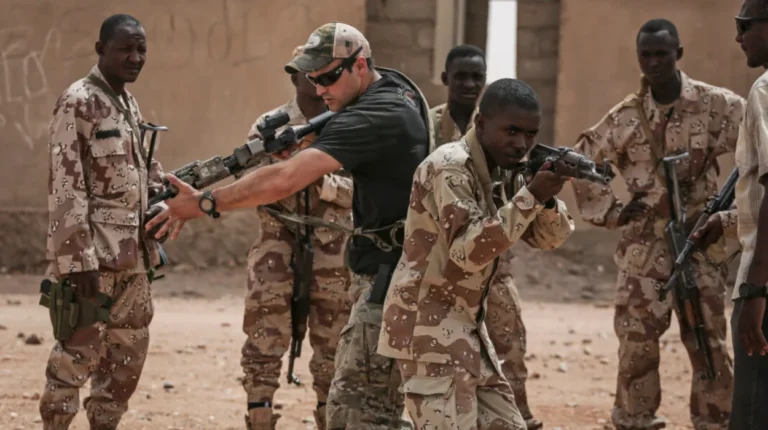
The Joint Task Force (JTF) has just delivered an important but cautiously optimistic announcement detailing the elimination of more than 1,000 terrorists as a result of Operation Hadin Kai during the last three months, while addressing the press on 5 May, 2026, in Maiduguri. The report clearly indicates the ongoing determined offensive maneuvers being conducted by our military against long-established terrorist organizations, including Boko Haram and their affiliates.
This announcement coincides with a critical phase for Nigeria’s counter-terrorism operations, whereby military successes must be balanced against continued vulnerabilities. Operation Hadin Kai, which has been used by the federal government as the flagship initiative of their North East counter-terrorism effort and continuation of reclaiming territory from terrorist organizations who have victimized this region since 2009.
“Troops with the Nigerian Military Joint Task Force have killed over 1,000 terrorists in the last 90 days,”
Maj.-Gen. Abubakar states, and these operations included targeting high-value insurgents such as 57 Commanders/Leaders within the insurgency. The killing of over 1000 terrorist network members will significantly affect the way in which these networks are able to operate without disrupting their command/control and improve their operational capacity in the states of Borno, Yobe, and Adamawa.
Strategic Gains and Tactical Realities
The neutralisation count of more than 1,000 fighters includes air strikes aimed at taking down the cells that carried out ambushes, bombings and kidnappings. “Operation Hadin Kai is making an impact,” as noted on military social media sites, offers a theme of momentum with video snippets from Instagram showing fortified positions and surrendered arms.
However these success stories have been diminished by the lack of detailed breakdowns regarding rescues, arrests, or the number of assets seized in the month immediately following the release of this report. Nationwide operations in previous quarters combined for 2,245 neutralisations, 1,993 rescues and 2,783 recovered weapons; but the JTF has been faced with the unique challenges associated with their operational theatre so the North- East specific breakdown does not provide as much insight as these figures would otherwise seem to suggest.
Maj-Gen Abubakar’s comments at the press briefing concerning unity and patriotism created a thread of national resilience that runs through the military’s message.
“We assure Nigerians of our commitment to protect lives and property,”
he stated, thereby providing reassurance intended to uplift public morale as citizens become fatigued from an insurgent campaign lasting over 17 years, resulting in the displacement of millions and tens of thousands of deaths.
However, the decline in surrenders from 16,000 in 2023 to markedly fewer now points to evolving terrorist tactics. Insurgents appear to be hunkering down, leveraging vast Lake Chad Basin terrains for hit-and-run operations. This adaptation challenges the JTF’s dominance, as evidenced by the commander’s call for media support to counter misinformation. In an era of digital warfare, false narratives amplify terrorist propaganda, eroding trust in security forces. Abubakar’s plea underscores a critical thinktank theme: counter-terrorism’s success hinges not only on bullets but on battles for hearts and minds.
Broader Counter-Terrorism Implications
Zooming out, Operation Hadin Kai’s results must be contextualized within Nigeria’s national security architecture. The North-East remains the epicenter of Boko Haram’s caliphate ambitions, but spillovers into the North-West and Lake Chad region complicate the landscape. Comparative data from 2024, where troops neutralized 10,937 terrorists nationwide, illustrates a trajectory of escalation in military tempo under successive administrations. Yet, persistent attacks—such as recent ambushes reported in border areas—remind us that neutralization figures, while verifiable through military logs, do not always correlate with reduced civilian threats.
“Unity, patriotism, and the support of the media are key to defeating these criminals,”
Maj.-Gen. Abubakar urged, framing the fight as a collective endeavor. This rhetoric resonates with thinktank analyses that advocate for integrated strategies: kinetic operations paired with governance reforms. In Nigeria, where poverty and youth unemployment fuel radicalization, military successes risk being Pyrrhic without addressing root causes. The JTF’s pivot toward non-kinetic efforts—rebuilding schools, markets, and farms offers a glimmer of holistic counter-terrorism, potentially reducing the insurgency’s appeal.
Stakeholder reactions, though not explicitly quoted in the briefing, echo through regional discourse. Civil society groups hail the 1,000 neutralizations as a morale booster, yet demand transparency on collateral damage and human rights compliance. International partners, including the Multinational Joint Task Force, have lauded similar ops, but funding shortfalls loom as global attention shifts to other hotspots like the Sahel. For thinktanks focused on terrorism’s global chains, Nigeria’s experience serves as a case study in asymmetric warfare: high body counts versus elusive victory.
Challenges Ahead and Policy Recommendations
Looking forward, the JTF faces a hydra-like foe regenerating through illicit economies cattle rustling, arms smuggling, and crypto-financed networks. The slight dip in activities post-1,000 neutralizations suggests operational pressure is working, but sustainability demands innovation. Maj.-Gen. Abubakar’s focus on intelligence and community ties is apt; enhancing these could spike surrenders anew. Thinktank experts recommend drone surveillance expansions, AI-driven threat modeling, and economic incentives for defectors measures proven in Colombia’s FARC demobilization.
Moreover, countering misinformation requires a robust strategic communications unit, countering terrorist Telegram channels with verified narratives.
“We need your support to continue this fight,”
the commander implored journalists, recognizing media’s dual role as watchdog and ally. In this vein, ethical reporting—balancing triumphs with scrutiny fortifies public resolve without glorifying violence.
Critically, this news item exposes terrorism’s tenacity in Nigeria. While 1,000 neutralizations mark progress, the insurgency’s mutation into factional warfare (ISWAP vs. JASDJ) demands adaptive doctrines. Policymakers should prioritize border securitization with Chad and Cameroon, where arms flow unchecked. For thinktanks, the imperative is clear: advocate data-driven policies that merge hard power with soft, ensuring metrics like these translate to lasting peace.
Pathways to Sustainable Peace
Ultimately, Operation Hadin Kai’s milestone is a tactical win in a marathon conflict. By neutralizing over 1,000 terrorists, including 57 leaders, Nigerian forces have degraded capabilities, yet the commander’s realism tempers euphoria.
“Efforts have resulted in only a slight reduction in insurgent activities,”
Abubakar noted, a sobering reminder that counter-terrorism thrives on persistence. As Nigeria navigates 2026’s security landscape, integrating military might with socio-economic revival offers the best counter to extremism’s allure.
Terrorism in the North-East is far from vanquished, but with strategic unity, Nigeria can tip the scales. For global observers, it’s a lesson in resilience: victories are incremental, but surrender is not an option.