The latest wave of long‑range Ukrainian drone strikes deep inside Russian territory marks a significant escalation in the geography of the war, pushing it further into the Russian heartland and exposing key economic and logistical nodes. The incident in which Ukrainian Drones Strike Oil Depot in Moscow Region and Logistics Hubs has drawn particular attention because it combines strategic energy infrastructure near Moscow with major logistics facilities in the Tambov region, demonstrating how drones are now reshaping both battlefield and rear‑area dynamics.
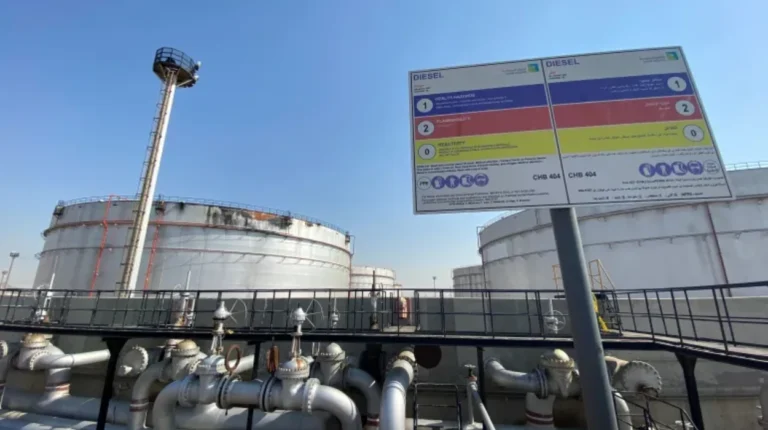
As per the Russian regional officials, the drones attacked the oil depot in the region of Noginsk in Moscow Oblast, leading to a massive fire outbreak in the fuel tanks there. Other drones attacked some warehouses in the city of Tambov where Russia’s biggest e-commerce company, Wildberries, has a huge warehouse in the city of Kotovsk. It is stated that seven people were killed and many others got injured in the attack on the warehouses.
The Night of the Attacks: Penetrating the Moscow Region
Multi‑directional drone operation
The strikes took place during the night, with the launch of a number of drones in the direction of the Moscow region and other targets, which suggests an attempt of what military experts call a multi-directional saturation of Russian airspace and the testing of its defensive capabilities. In this respect, the information on how Ukrainian Drones Strike Oil Depot in Moscow Region and Logistics Hubs is not just one occurrence; it seems to be only a piece of a larger picture, in which Ukraine tries to spread Russian defense facilities out even further.
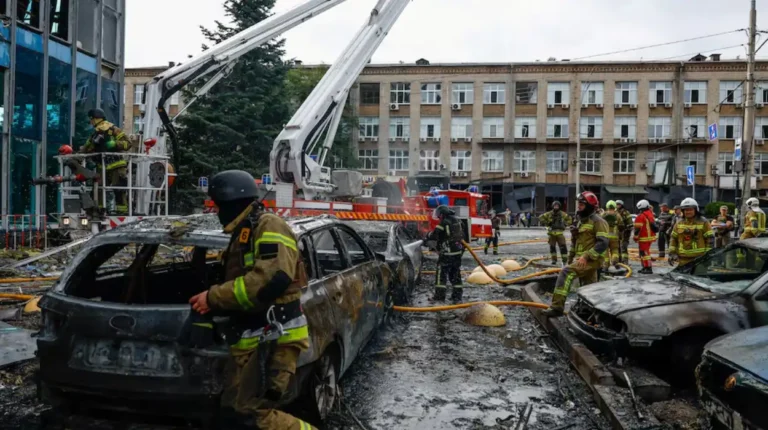
According to eyewitness reports and videos uploaded from the city of Noginsk, there were huge flames raging in the vicinity of the oil depot right after the attack, accompanied by dense black smoke coming up in large columns from the area. Emergency response teams were immediately dispatched to the location in order to evacuate people in the neighborhood due to the danger of secondary explosions.
In Tambov region, particularly in Kotovsk, drones hit large logistics centers that serve both regional distribution and national e‑commerce flows. Wildberries, widely known as Russia’s leading online retailer, confirms that one of its major warehouses was struck, causing extensive fire damage and resulting in multiple casualties among warehouse workers on the night shift.
Casualties and local impact
According to regional authorities in Tambov, seven warehouse workers have been killed during the attacks on logistics facilities, while over fifty people have been injured in the strike, in various locations. Most of the victims have burns, shrapnel injuries, and injuries from explosions, and have been rushed to the local hospitals that have become overwhelmed with casualties resulting from the strike. Particularly poignant is the impact of the attack on the Wildberries warehouse. Usually, the workers in this warehouse process hundreds of thousands of items ordered through the internet in various parts of Russia; however, due to the recent strike, it has been burnt down, and the work has been interrupted. War has come to the warehouse of civilians, not to some frontline.
Wildberries has issued an official statement expressing condolences to the families of the victims and pledging to support those affected. The company stressed that it will reroute orders through other centers while assessing the full extent of the damage. In its communication, the retailer framed the attack as a blow to civilian economic activity, declaring that
“our employees were peaceful civilians working to support customers across Russia, and their loss is an irreparable tragedy for our company and for their families”
– Wildberries management.
Strategic Targets: Fuel Depots and Dual‑Use Logistics
Why Noginsk matters
It is important to understand that the Noginsk oil depot is not merely an auxiliary fuel storage point; rather, it is the component of the complex logistical chain, which provides both civilian and military spheres of Russia with the needed resources. Being located near Moscow Oblast, which is only 50 kilometers away from Moscow proper, gives the depot a special symbolic value. Ukrainian drones striking oil depot in Moscow region and logistics hubs clearly convey a message that even those well-defended points close to the capital’s metropolitan area are still vulnerable.
The facilities for energy resources are usually used for storing fuel, which can be sent further to the military bases, air fields, and other industrial complexes involved in the war effort. Strikes at such facilities create problems for the Russians as far as logistics are concerned.
Ukrainian officials typically maintain a policy of ambiguity regarding specific strikes on Russian territory, but they have repeatedly argued that infrastructure used to support the war is a legitimate military target. As one Ukrainian official recently encapsulated the justification,
“If Russia uses its fuel and logistics infrastructure to wage war on our territory, then those facilities become part of the battlefield, wherever they are located”
– Ukrainian government source. This conceptual framing places sites like Noginsk directly within Ukraine’s declared scope of operations.
The Wildberries warehouse and “dual‑use” debate
The assault on the Wildberries distribution center in Kotovsk is the perfect example of the increasingly fierce discussion around dual-use infrastructure in contemporary warfare. While formally being a civilian logistics center where consumer products, clothing, electronics, and other goods are stored, big logistic centers can also form part of wider supply chain structures used to support the war economy by storing supplies needed for weapon manufacturers, delivering goods to companies connected to the military industry, or simply leaving other state-owned logistics centers free to focus only on military activities.
From Russia’s perspective, the attack is presented as a deliberate strike on civilians. Russian officials have condemned the incident, asserting that
“these drone attacks are terrorist actions, targeting peaceful workers at civilian warehouses and trying to spread fear among our population”
– Russian regional authority. This rhetoric aims to frame Ukraine’s actions as outside the boundaries of acceptable warfare, and to galvanize domestic support for retaliation.
Ukraine and pro‑Kyiv commentators counter that Russia has blurred the line between civilian and military infrastructure by drawing its entire economy into the war effort. In their view, logistics hubs that keep the wartime economy functioning are de facto part of the support structure for aggression against Ukraine. A pro‑Kyiv analyst argued that
“Russia cannot turn every piece of infrastructure into a cog in its war machine and then claim immunity when those same assets are targeted”
– security analyst close to Kyiv. This clash of narratives underscores the legal and ethical complexity surrounding strikes on dual‑use sites.
Air Defense Under Strain: Moscow’s Vulnerabilities Exposed
Saturation tactics and air‑defense gaps
The fact that Ukrainian Drones Attack Oil Storage Facilities in Moscow Region and Logistics Centers in the context of a wider operation using hundreds of drones shows how Ukraine is trying out the concept of saturating enemy defenses. Using many drones at once, Kyiv forces the Russian air defense system to deal with many threats at once, thus increasing the probability of success. According to military analysts, Moscow region features multi-layered air defense, including radar detection, missiles, and electronic warfare systems. However, it is challenging to control the airspace because the drones are small, fly low, follow unpredictable trajectories, and can form huge swarms. It is especially hard to control the skies above economic facilities that are widely distributed in the area.
The successful hit on the Noginsk depot is therefore interpreted as a sign that Ukrainian planners can identify weak points in Russia’s defensive grid. As one regional security expert put it,
“The strike near Moscow is not just about physical damage; it’s about demonstrating that the capital’s shield is porous under sustained pressure”
– Moscow‑based military analyst. The psychological effect of that message is powerful: it reminds Russian citizens that the war is no longer limited to distant front lines.
Pressure on Russia’s strategic calculus
Ukrainian Drone Strikes on Oil Depot in Moscow Region and Logistics Hubs and other similar attacks might compel the Russian decision makers to divert some air defense assets from the front lines towards defending their rear. This will not only mean less security for the front line but also that the Russian forces at the front are also having problems with their own air defenses vis-à-vis Ukrainian drones and missiles. Such a dilemma forms the crux of the logic of deep strike attack for Ukraine which is compelling Russia to make a choice between protecting its rear area economic infrastructure and its front-line offensive posture. Also, such an attack close to Moscow poses political problems for the Russian regime itself. Failure to protect strategically vital assets close to the capital may damage the perception of Russians regarding the effectiveness of the state to protect them.
Human and Economic Consequences: Beyond the Battlefield
Workers as frontline victims
The deaths of seven warehouse workers at the Wildberries facility highlight a theme that has become increasingly pronounced as the war reaches deeper into both countries’ economies: civilians engaged in routine economic activity are becoming frontline victims, not because they live in border areas, but because their workplaces have strategic importance.
Most of those who died and got injured worked for low pay, being on night duty to cope with the large amount of orders taken by one of the leading retailers in the country. The people living in Kotovsk and in the nearby regions are left without their families’ main earners, having few opportunities for receiving decent medical and psychological assistance. According to the Russian propaganda, those workers became victims of terrorism of Ukrainians, whereas Ukrainians themselves claim that the guilt should be attributed to the government that turned its economy into the means of waging wars.
Disruption to commerce and logistics
For Wildberries and other logistics operators whose sites were hit, the immediate consequences include halted operations, damaged stock, and costly reconstruction work. The company will likely need months to fully restore capabilities at the affected warehouse, even if it can divert flows to alternative hubs. For customers, this may translate into delayed deliveries and reduced availability of certain products, though the national scale of Wildberries’ network offers some buffer.
At a macro level, the hit on Noginsk contributes to broader strain on Russia’s fuel logistics. While it may not cause acute shortages in Moscow, it adds to cumulative damage from previous strikes on refineries, depots, and energy infrastructure, forcing rerouting and redundancy planning. In wartime conditions, these costs mount and constrain the state’s flexibility in allocating resources to both civilian and military needs.
Escalation Risks and the Future of Drone Warfare
International implications
Globally, the reality that Ukraine’s Drones Attack Oil Depot in Moscow Region and Logistics Sites will add to the discussions among Western policy makers regarding the level that should be considered an acceptable limit for Ukraine’s employment of long-range strike capabilities. Many Western nations insist that Ukraine has the freedom to defend itself and target as per the choice of Ukraine, though they have stated the fact that the weapons provided by them have restrictions in usage. Ukraine’s increased fleet of homemade drones adds further complexity to this situation as the drones will penetrate inside Russia without any dependency on the Western drones.
There is a fear of escalating to higher levels; will repeated targeting of such critical infrastructure located close to Moscow lead to excessive retaliation from Russia or even make it resort to even harsher attack on Ukraine’s infrastructure and towns?
Drone warfare reshaping the battlefield
The operation in which Ukrainian Drones Strike Oil Depot in Moscow Region and Logistics Hubs underscores how drones are transforming the war’s geography. Instead of a clear divide between front line and rear, nearly any strategic node—fuel depots, logistics hubs, industrial plants—within reach of drones becomes part of the battlespace.
For Ukraine, this offers an asymmetric tool: relatively cheap platforms can impose disproportionate economic and psychological costs on a larger adversary, forcing Russia to expend expensive interceptors and reconfigure its defenses. For Russia, it creates a persistent sense of vulnerability, as the physical security of its infrastructure can never be guaranteed.
As one Western military observer noted,
“We are witnessing a preview of future conflicts, where deep economic infrastructure is a constant target and cheap drones make distance and rear‑area status far less protective than in past wars”
– Western defense analyst. In this evolving landscape, the Noginsk depot and Wildberries warehouse are not isolated cases, but nodes in a larger pattern of contested infrastructure.