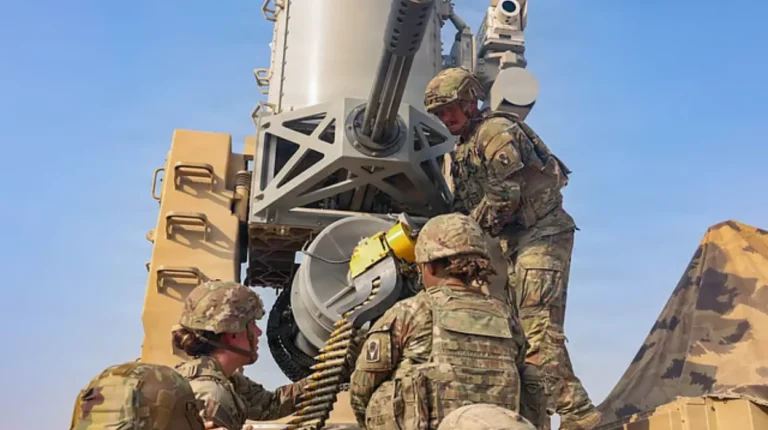
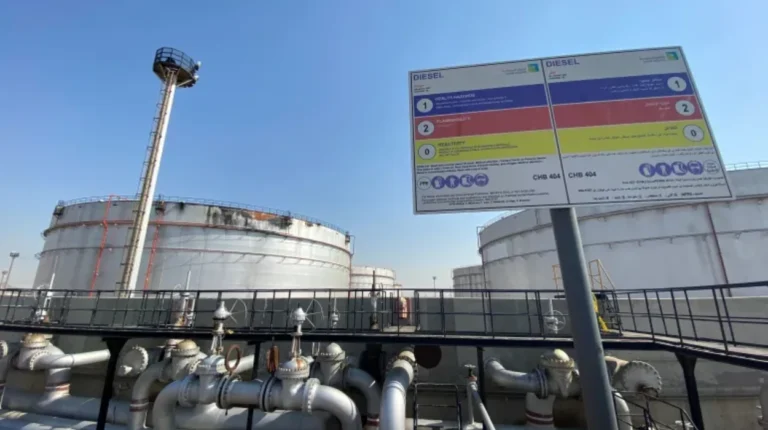
Iran has escalated its confrontation with the United States by threatening to widen disruption across vital maritime routes after President Donald Trump ordered a renewed blockade on Iranian ports. The warning raises the stakes far beyond a bilateral clash, because any move against major shipping chokepoints could rattle global energy markets, inflate freight costs, and deepen instability across the Middle East. At the center of the dispute are two of the world’s most sensitive waterways: the Strait of Hormuz and, potentially, the Bab el-Mandeb route linking the Red Sea to the Gulf of Aden.
This new development comes as a direct pressure confrontation between Tehran and Washington. Based on the pronouncements of the Iranian military and the media, if America continues its efforts to strangle the exports and seaports of Iran, the latter might respond by blocking other export routes that are used by American allies. The President, on his part, has backed the embargo with the promise of even more severe attacks in case Tehran rejects talks.
The Core of the Escalation
The Reuters report at the center of this story says Iran’s Islamic Revolutionary Guard Corps threatened to close
“all other export corridors that benefit the U.S. and its allies.”
That statement is more than rhetorical fire. It signals that Tehran is prepared to broaden the pressure campaign from a local dispute over ports and shipping lanes into a regional logistics crisis.
According to the same report, this warning was made following the closure of the Strait of Hormuz and the re-imposition of naval blockades in Iran’s ports by the US. This is significant since this transforms the dispute into a maritime dispute and not a conventional one. Both parties are currently using their respective maritime capabilities as tools of punishment. In effect, the signal being sent out by Tehran is that if the commerce of Iran is being blocked, then commerce involving its opponents can be affected as well. This is risky especially in a region where oil, gas, and other maritime traffic must go through perilous maritime routes.
Why Hormuz Matters
The Strait of Hormuz remains the most obvious pressure point in this confrontation. It is one of the world’s most important maritime chokepoints because so much Middle East energy trade depends on it. Reuters reported that the standoff is centered on Hormuz because it is the route most directly connected to the export and movement of oil through the Gulf.
It is not just an issue with an official closure. From the market’s history, it is known that once Hormuz comes under threat, traders factor the risk straight away. Futures can go up because of expectations, and carriers can postpone or cancel their travels even before the first rockets are fired or the first mines are set. It turns out that the political message is as effective as the real thing. According to Reuters, there were enough changes among the vessels that the region was interested in what was happening to them and the energy market was paying attention. This means that it is not always the military action but the uncertainty that brings trouble first.
Bab el-Mandeb Adds Another Front
The more alarming part of the Reuters account is the possibility that Iran could use allies or aligned groups to pressure the Bab el-Mandeb route as well [Reuters]. This narrow passage between the Red Sea and the Gulf of Aden is one of the world’s most strategically sensitive maritime gateways, because it links Asian, Middle Eastern, and European trade flows through a single corridor.
Any threat in that area would not only disrupt the flow of oil but would also hamper container transport and naval movement and Suez-related trade as well. In this regard, Reuters reports on a threat made by a Houthi official about closing Bab el-Mandeb and rising prices of oil to “$200 per barrel” in this event. Even though this prediction may sound farfetched, it illustrates the level of concern this type of a situation would cause. It is for this reason that the current crisis is especially grave. Hormuz and Bab el-Mandeb do not constitute separate hot spots. Instead, they are part of a chain of related leverage points within the Middle East maritime infrastructure.
Trump’s Blockade And Threats
The order by Trump to impose fresh sanctions on the Iranian ports signifies toughened American policy stance. According to the Reuters report, the U.S. military had imposed a new blockade after Iran’s attack on ships at the Strait of Hormuz. With this move, the White House has a justification for itself in terms of maritime security and deterrence alone apart from other considerations like sanctions and diplomacy. However, this is not where the story ends. As per Reuters, in his interview to Fox News, the President made remarks saying that the U.S. can target Iranian power stations and bridges if Tehran rejects negotiations.
That approach may be intended to force Tehran back to the table. Yet it also raises the risk of miscalculation. Once both sides begin naming specific targets and routes, the conflict becomes easier to escalate and harder to contain. The messaging may be designed to deter, but it can also corner leaders into taking steps they would otherwise avoid.
Iran’s Strategic Logic
Iran’s public stance, as reported, is rooted in reciprocity. The IRGC’s line that
“regional energy exports are either shared by all, or denied to all”
is a clear warning that Tehran sees maritime access as a collective vulnerability. In other words, if Iran is denied normal export channels, it may try to ensure that its rivals feel the same pain.
This rationale is also coherent with Iran’s general deterrence policy. Iran has repeatedly demonstrated its capability to increase the costs of war through proxy attacks, threat of chokepoints or through creating uncertainties, rather than through making a definitive attack. This rationale is very relevant in the case of the Gulf region, because the geography of the region provides even a weaker state an opportunity to affect global trade. The political intention of Iran does not have to be closing all the lanes on a permanent basis. In most cases, it is an effort to make the cost of the pressure unbearable.
Economic Shock Could Spread Fast
The economic danger in this story is immediate and broad. Oil markets react first, but they are not the only channel. Shipping rates, commodity prices, refinery margins, and even consumer inflation can be affected when a major route is threatened. The Reuters report’s mention of a possible “$200 a barrel” price scenario highlights how quickly expectations can become extreme in a crisis.
For energy importers, the practical problem is replacement capacity. If tankers cannot move smoothly through the Gulf, buyers must search for alternate supply routes or pay a premium to secure cargoes. For exporters, the issue is equally severe because any interruption can create congestion at ports, bottlenecks in storage, and revenue losses for producers.
This is also why neighboring states are watching closely. Saudi Arabia and other Gulf producers depend on reliable access to sea lanes, and even short disruptions can undermine confidence in the region’s trade system. A prolonged standoff could also encourage companies to hedge more aggressively, raising costs across the chain.
A Broader Regional Warning
What makes this moment different from routine U.S.-Iran friction is the way the conflict is spreading across multiple maritime spaces. Hormuz is already a flashpoint, but Bab el-Mandeb brings the Red Sea and broader Indian Ocean traffic into the picture. That widens the crisis from a Gulf confrontation into a regional maritime emergency.
It also means third parties are likely to become more involved, whether through naval escorts, diplomatic mediation, or commercial rerouting. The Reuters report placed the episode in the context of “two of the world’s most vital energy arteries”. That phrase is not exaggeration. These routes are vital because they connect energy producers to global markets with little redundancy.
The warning signs are therefore not just military. They are commercial, diplomatic, and psychological. Shipping firms need predictable lanes. Governments need stable markets. Traders need confidence that a crisis will not spiral. The current exchange between Tehran and Washington undermines all three.
The next phase will likely depend on whether either side steps back from the most damaging moves. If the U.S. keeps the blockade in place and Iran doubles down on threats to expand disruption, the situation could move toward direct attacks on shipping infrastructure. If there is even a narrow diplomatic opening, the immediate risk premium in oil and shipping could ease.
Another important consideration is the potential shift from declaratory threats to operational threats made by Iran. The threats made by the IRGC alone could have an effect on the markets; however, the operational implementation against the ships or even port facilities will be a much more dangerous step. Likewise, the statement made by Trump about expanding strikes against Iran means that Washington is ready to up the ante instead of taking the escalation. Currently, it is safe to say that the situation between Washington and Tehran can be seen as a game of maritime brinkmanship with a global impact. Iran is signaling its ability to make trade in the region pay for the U.S. pressure, whereas Trump is signaling his ability to respond with force to any form of pressure.