Iran’s reported vow to avenge the killing of former Supreme Leader Ayatollah Ali Khamenei has injected fresh uncertainty into an already volatile Middle East. The statement, attributed to Supreme Leader Ayatollah Mojtaba Khamenei, comes at a moment of deep mourning, political transition, and heightened regional tension, making the killing far more than a domestic Iranian tragedy.
This report is significant in the sense that it has the combination of three very explosive things occurring together: the assassination of a historic political/religious leader, a time for succession within Iran’s political power structure, and the rhetoric of revenge at a time when the entire region is extremely sensitive. From the information provided in the available literature, it can be said that Mohammad Khamenei has put forth the idea of revenge not only personally, but also nationally.
A historic loss in Iran
The assassination of Ali Khamenei is referred to in the news as an unprecedented shock for the Islamic Republic. In several reports, it is mentioned that there has been a second supreme leader buried within four decades in the history of Iran, emphasizing what an unprecedented and important event it is for the country’s political regime. Funeral prayers were conducted in Mashhad, and it is reported that the burial ceremony took place in the same city as well, where Ali Khamenei himself originates from. The significance of the funeral in terms of national mourning and the manner in which the deceased is being laid to rest point at the fact that the leadership of the country wants to portray this event as an expression of national solidarity rather than weakness.
The reports also indicate that Khamenei was buried with family members, a detail that reinforces the intimate and personal dimension of the loss while also showing how the event became a public spectacle with political meaning. That mix of private grief and public power is central to understanding why the killing has generated such intense rhetoric.
The revenge statement
The core of the story is the reported message from Mojtaba Khamenei. The available coverage says he pledged revenge and described avenging his slain predecessor and father as a duty demanded by the people. The most repeated line in the reporting is that
“the demand of the people”
justified retaliation, a phrase that turns the issue from one family’s grief into a broader political obligation.
It was also claimed that this message implied that the whole world will support Iran’s struggle for the rights that were denied it. If this information is correct, then Tehran is trying to get some kind of moral support for whatever decision comes next. So, the language is not about anger only, but also about preparing for actions. The language is crucial here. Governments tend to use such messages after the assassination of their officials to consolidate people and express resolve to their enemies. In this case, the pledge for revenge not only consolidates the people but also is the expression of Iranian identity itself.
Why the timing matters
The timing of the statement is as important as the statement itself. It emerged while Iran was still burying its slain leader, during a period when public emotion would be highest and political messaging would have maximum impact. Such timing can help a leadership transform grief into political momentum.
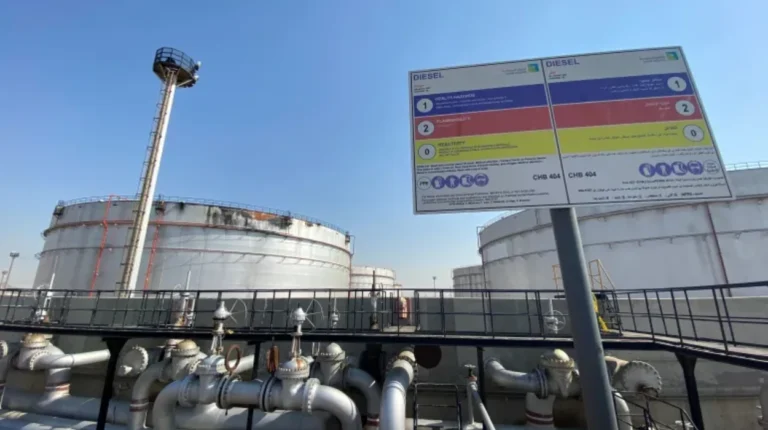
Such threats arise at a time of rising tensions within the region as well. Reports from around this period have shown concerns for threats against shipping within the Strait of Hormuz and new pressures on Iran over maritime security. Such circumstances make threats of revenge particularly ominous, since they may not be interpreted as symbolic in nature, but rather as a precursor to a genuine escalation in hostilities. There is a long history of the Middle East going through cycles in which an attack, assassination, or strike prompts some kind of response that spills out into broader consequences. In such a situation, threats of revenge raise the potential for retaliation from Iran in whatever way it sees fit – either via regional proxies, maritime operations, cyber activities, or military signals.
The political message inside Iran
Domestically, the revenge vow serves several purposes. It gives the leadership a language of defiance at a moment when shock could otherwise weaken authority. It also allows the state to present itself as the guardian of national dignity, especially if the assassination is portrayed as an external attack on Iran’s sovereignty.
This is especially important during a succession-sensitive period. The death of a supreme leader creates questions not only about personal leadership but about the durability of the system built around him. By immediately emphasizing vengeance, the leadership may be trying to prevent speculation about weakness, division, or confusion at the top.
There is also a public messaging function. The report that revenge is the “demand of the people” helps merge state policy with popular emotion. That framing is politically useful because it makes retaliation seem less like a discretionary decision and more like an obligation imposed by national sentiment. In a state where legitimacy rests heavily on ideological continuity, that distinction matters.
Regional and international stakes
Internationally, there are implications involved as well. The declaration of a revenge agenda is bound to send warning signals to Israel, the US, and other Gulf countries, not to mention the major maritime powers. In the coverage within the same reporting period, indications have been made about concerns about the Strait of Hormuz, one of the most strategic waterways in the entire world.
This particular statement has come at a time when everyone is actually keeping an eye out for any possible escalation from the Iranians. The fact that global solidarity has been mentioned in some of the reports indicates that perhaps Iran is trying to win some sympathy outside of its own country. Nevertheless, in practical terms, this is only likely to heighten tensions among diplomats and military strategists. As far as the global economy is concerned, this will pose risks because anything that makes people even remotely believe that Iran may seek vengeance can send shockwaves through oil prices, shipping premiums, and investment confidence.
What the reports confirm
The coverage available at this stage confirms a few important points. First, Ali Khamenei is being reported as having been killed and buried in Mashhad, with mass funeral coverage describing the event as historically rare. Second, Mojtaba Khamenei is reported to have issued a revenge-focused statement tying retaliation to public demand.
The reports also confirm the broader atmosphere: anger, mourning, and geopolitical unease. What they do not fully confirm, at least in the material available here, is the full original text of the statement, the circumstances of the assassination, or any official operational details about Iran’s response. That means the safest journalistic formulation is that Iran’s supreme leader was reported to have vowed revenge, rather than treating every quoted line as independently verified direct text. This distinction is important for accuracy. In fast-moving breaking news, especially around conflict and assassination, the line between reported statement and confirmed transcript can become blurred. A careful article should preserve that distinction while still conveying the seriousness of the moment.
The bigger picture
However, the true meaning of this story may not be confined to the vow alone but in how it shows the strategy employed by the Iranian government. It seems that the Iranian leadership wants to turn the assassination into a story of defiance rather than one of weakness. This explains the emphasis placed on concepts such as revenge, martyrdom, and public demand. Depending on whether or not the Iranian leadership will follow through with their rhetoric, either the region would see another cycle of retaliations and counter retaliations or the vow would have fulfilled its political role as an image of strength.