One of the world’s greatest moral leaders Pope Leo XIV has employed an extremely powerful platform in issuing an unequivocal warning about the threat of AI, emphasizing that it is no longer an issue about innovation but peace, power, and the very existence of humanity itself. Indeed, in his recent appeal, Pope Leo XIV highlighted the danger of allowing this emerging technology to exacerbate conflict, accelerate militarization, and diminish human responsibility unless stringent restrictions are imposed upon it.
The message is sent at a time when AI is advancing quickly in many different domains, bringing hope along with some concern. The point raised by Leo is not one against technology. Instead, it is a response to the belief that quickness means advancement. The core of his message lies in the need for ethics in AI development, because the world cannot sustain an irresponsible race towards automation and weaponization.
Why the pope chose this moment
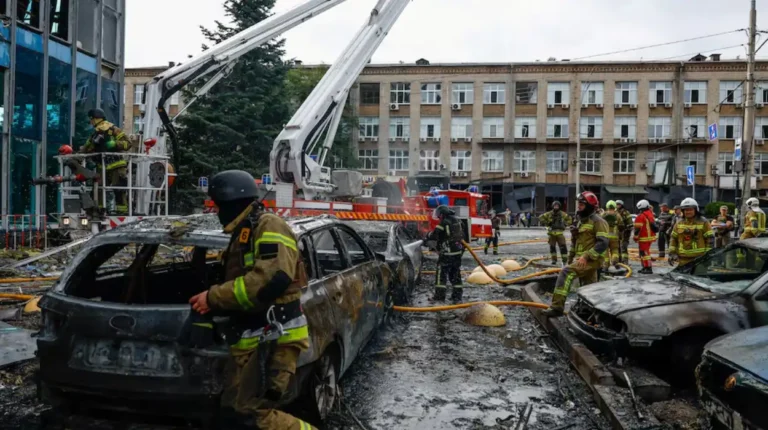
His involvement takes special significance owing to the fact that it connects AI to the existing real-life problems in the form of wars, fake news, and the consolidation of power among some technocratic and military groups. As reported, his latest teaching paper is considered to be very important for the future of AI, particularly considering the existing wars in the Middle East and Ukraine, where AI-assisted targeting has become more prevalent.
It is also not a new worry for Pope Leo. Since the beginning of his papacy, he has warned about the dangers that artificial intelligence could have on society and morality, such as its impacts on the well-being of children, the distortion of truth, and the ease with which conflict can be managed remotely. With his latest warning, however, he broadens his concerns beyond that point: the world is on course to an inevitable future in which war itself will become increasingly mechanized and normalized.
The core warning on conflict
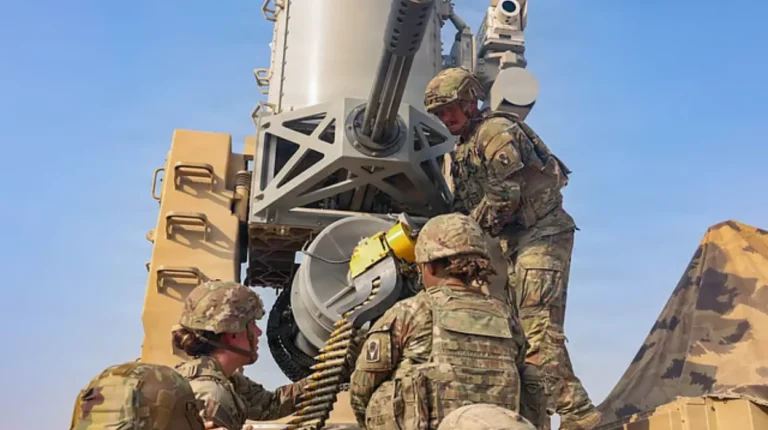
At the center of the pope’s message is the claim that AI is helping fuel conflict rather than contain it. In coverage of the document, he warns of “a spiral of annihilation” and “perpetual warfare” as dangerous outcomes if AI-driven weapons and decision systems continue to spread without strong oversight, according to reporting on his remarks. The language is intentionally severe because the stakes, in his view, are severe.
This is a powerful warning in light of the fact that Leo connects the idea of technological capacity with moral distance. It becomes much easier for humans to distance themselves from the consequences of war if AI helps them avoid experiencing the human aspect of such consequences, since it allows them to carry out violence at greater distances from themselves. This moral distancing, according to the pope, means that it is much more likely that conflict will be waged.
It is important to remember that, beyond the battlefield technologies discussed above, AI technology may also be used to spread disinformation, propaganda, and fear. Therefore, we must understand AI as a feature of modern warfare itself, and not something that comes into existence only when conflict does.
His stance on slowing AI
Most clearly articulated, Leo argues that development in the AI sector needs to slow down sufficiently so that governance catches up. This can be achieved through “greater political engagement,” in which he argues that there can be no inactivity on behalf of governments since technology moves faster than regulation. This is a significant policy stance since it counters the traditional stance by the industry to innovate first, then regulate second.
By speaking of speed, he implies that speed has become a problem by itself. Indeed, a lack of thorough analysis may lead to the implementation of dangerous systems, whose potential negative consequences will not be perceived by the general public. This point is particularly important in relation to AI development within the military sector, as decisions made on its basis may be used outside national borders before any discussion or agreement.
Moreover, he raises concerns about the situation when artificial intelligence becomes so deeply integrated into decision-making processes that people will no longer consider themselves responsible for the results. Thus, this idea goes far beyond the religious context and addresses the problem of widespread anxiety regarding global automation.
Control and concentration of power
A second critical topic in the pope’s argument concerns control over the technology. In particular, he raises the concern of AI becoming “consolidated in the hands of a select few.” This phrase can be seen as referring to the concentrated power and influence of a limited number of firms, government bodies, and military organizations that have the capacity to design and govern the development process of AI technologies.
This problem plays an important role within the political context of the pope’s warning. Namely, if the technology is controlled by a small number of players, its impact will not necessarily serve the common good. On the contrary, such a situation would mean that AI would become a source of asymmetrical power and, therefore, could result in the private benefits from its use being shared by few while leaving the negative consequences for the public at large.
His position aligns with a broader ethical tradition that insists technology must remain subordinate to the common good. In the AI context, that means transparency, democratic control, and international rules are not optional extras. They are the only way to prevent a small number of powerful actors from deciding the future of a technology that will affect everyone.
What the document adds
This is described as Leo’s most significant piece on artificial intelligence teaching, with one publication claiming that it takes up around 42,300 words. This kind of weight is important because it means that the Vatican considers AI to be an essential civilizational question, not merely an item for policy discussion. The sheer volume of attention being paid to this subject by the pope suggests that AI is considered one of the moral issues of our time.
The teaching also seems to address AI in the context of other concerns that the Vatican has raised, such as issues related to peace, dignity, responsibility, and protection of the vulnerable. This also shows the Vatican’s interest in the subject of AI as an extension of their earlier interests in technology beyond the softer topics of job displacement and education into geopolitics.
That makes the statement unusually broad in scope. It does not simply ask whether AI is useful. It asks whether AI, in its current trajectory, is making the world more dangerous.
The meaning of the warnings
“Disarming” the role of the pope in this case refers to regulating the application of artificial intelligence rather than calling for the complete disuse of AI technology. This is important to highlight since Leo is not saying that AI technology is inherently bad and therefore has no valid use at all. His assertion is about depriving technology of the capacity to break away from ethical consideration.
From this angle, the pontiff’s caution is both religious and political in nature. The religious context can be linked to the Vatican’s commitment to human dignity and morality. On the other hand, politically, the pontiff seems to be warning the governments about failing to regulate such an influential technology.
There is also a subtle but important philosophical point in his intervention: AI should serve human beings, not redefine what it means to be human. When the pope warns about conflict, he is not only talking about bombs or software. He is talking about a worldview in which human judgment is gradually replaced by systems that are fast, scalable, and opaque.
Why this matters now
This context makes the message particularly important since AI capabilities are advancing rapidly while at the same time warfare in several parts of the world reveals the extent to which new technologies may change warfare. The fact that Leo XIII speaks out at a time like this makes his message particularly compelling.
Furthermore, the source of this message plays an important role. A pope may make an announcement that carries a significant amount of power due to the symbolic nature of such messages even for those who do not necessarily accept Catholic beliefs. Moreover, the address made by the pope is particularly important since he is addressing not just Catholics, but the world’s leaders.
His message also lands in a period of growing anxiety about AI safety, misinformation, and concentration of power. As those concerns spread, the pope’s call to slow the technology may sound less like caution and more like a realistic demand for control.