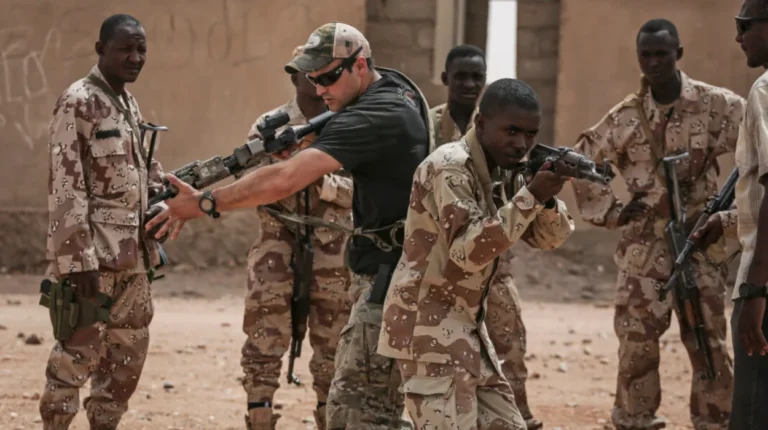
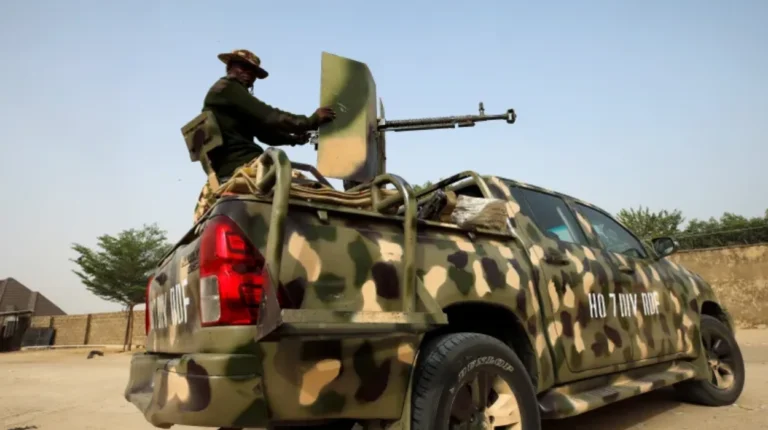
The training pacts of Nigeria-South Africa are becoming agreements at a time when threats to security in the African continent have become increasingly open and cannot be handled with nationalistic localized efforts. Weak border controls and weak governance systems, and unequal military strength in the regions including the Sahel and the Lake Chad Basin still allow violent extremist organizations to take advantage of them. The government is also beginning to realize that insurgent movements are now operating along national borders, and militaries should reconsider the way they train, plan and collaborate.
Both Nigeria and South Africa hold mayoral positions in the security structure in Africa. Nigeria is experiencing long-term counter-insurgency operations against militant factions that are leading a fight in the northeast of the country, with South Africa commonly taking part in the peace support operations in the region, as well as maritime security operations. This is a strategic motive to share experience in the form of organized military education and common training courses by these unique realities of operation.
Shared interest in regional stability
Cooperation is becoming more popularly seen as one method to fill gaps between the experience of operations and technical capability by security planners in both Abuja and Pretoria. The military of Nigeria has gained a significant experience on the field over the years in the counter-insurgency operations and is especially experienced in the operation of the environment mediated by the irregular warfare and the displacement of the civilians. South Africa, in its turn, has a good institutional tradition of professional military training and technological assimilation.
Through joint training capabilities, these strengths can be brought together by both countries. Nigerian officers introduce operational real-life situations in the classroom and South African institutions offer analytical frameworks and sophistication training facilities. With time, this kind of cooperation slowly harmonizes the thinking of operations in two of the most competent armed forces in Africa.
Expanding security dialogue since 2025
The cooperation between the two nations received another impetus in 2025, as a part of defense dialogues. Bilateral conferences highlighted the necessity of long term training exchanges particularly in fields where there is a need to coordinate, in aviation, intelligence analysis, and counter-terrorism doctrine. These deliberations transcended symbolic pledges of formalized programs of instructor interactions and systematic officer schooling.
This focus on long-term training is based on the understanding that counter-terrorism should be approached as an institutional imperative, as opposed to a tactical success. Through instilling the element of cooperation into the system of professional education, both Nigeria and South Africa have a goal of raising a generation of officers who will have similar tendencies towards addressing security issues.
Operational lessons shaping joint counter terrorism doctrine
The Nigeria-South Africa training agreements are greatly influenced by experience achieved by Nigeria in its long term counter-insurgency campaigns. The insurgent tactics have changed over the years requiring the Nigerian forces to be flexible to the changing conditions in the northeast because of years of conflict. Such experiences are the basis of case studies that are applied to joint training programs.
Both countries believe that it is valuable to translate battlefield experience into structured doctrine as a way of military planning. Training courses are also looking more at how insurgent groups are improving the tactics of adapting to the terrain, ambushing security forces in unconventional ways.
Operation Hadin Kai as a learning platform
The current military operation of Nigeria called Operation Hadin Kai is one of the biggest sources of operational knowledge in the partnership. The campaign was a product of the previous campaigns to fight insurgency groups that were active in northeastern Nigeria. Nigerian commanders have over the years been faced with a broad spectrum of tactical problems including massive assaults on military camps and military bases, as well as decentralized guerrilla assaults on civilian populations.
Such operations are frequently examined by officers who are involved in joint training. Through analysis of actual field or operational situations, participants get to explore the impacts of command decisions, information collection and coordination between units in the complex environments.
Adapting to insurgent tactical evolution
There has been an ability by the insurgent groups in the area to adapt fast. They constantly alternate between the traditional raids and decentralized ambush operations, which requires the security forces to be adaptable in their operations planning. In response, the Nigerian commanders have decentralized command structures and enhanced the position of junior officers who are in charge of front line operations.
South African members of the learning team engaged in observing such developments have an exposure to the facts of high-intensity irregular warfare. These insights are especially important to those forces who might have to operate in a multinational operation where similar tactics are observed.
Asymmetric warfare expertise within training partnerships
The growing dependence on irregular warfare practices has seen asymmetric warfare as a theme when it comes to training agreements between Nigeria and South Africa. Military trainers are geared towards training officers to address threats that are quite different to the conventionally battlefield enterprises.
Adaptability, intelligence coordination, and quick decision-making in a space where threats are unpredictable and widely scattered are some of the aspects that are usually highlighted in training modules.
Countering improvised explosive devices
Improved explosive devices are one of the most threatening scenarios of military forces that are active in insurgency areas. The Nigerian army has been on numerous occasions coming across these weapons both in the rural region and on strategic roads. This has necessitated the establishment of special forces that deal with identification and elimination of explosive risks.
These encounters are to be analyzed in detail through training programs. Nigerian trainers provide details of how insurgent behavior patterns, land formations and reconnaissance techniques determine the possibility of coming into contact with explosive devices. Such lessons enable the South African personnel to come up with preventative measures before they encounter such threats during deployments.
Integrating air power into counter insurgency
Air power has gradually become a central element in Nigeria’s counter-insurgency campaigns. Aircraft provide surveillance, logistical support, and close air support for ground forces operating in difficult terrain. Coordinating these aerial capabilities with ground units requires careful planning and communication.
The history of South Africa in the aviation training and aircraft maintenance business brings in some expertise to collaborative efforts. The two countries share pilot and planner experiences regarding mission coordination, maintenance logistics and safety procedures that are required to sustain aerial operations.
Strengthening battlefield survivability
The training programs also analyze the ability of the military units to be resilient when facing long deployments. The Nigerian forces serving in the distant posts have developed the ability to strengthen the defensive lines, control the few supply lines, and stay motivated in long missions.
These experiences can be transferred to other simulation exercises and training manuals hence making them transfers. These scenarios can be studied by South African forces, so that they will be able to adopt the same strategies in the future peacekeeping or stabilization operations.
Professional military education and strategic cooperation
Nigeria-South Africa training pacts are institutional in nature and are made up of military education. Operational lessons are developed and turned to more general thought in war colleges and command institutions. The officers who attend the joint courses do not only have discussions on the tactical aspects of counter-terrorism, but they also discuss the political and social aspects of counter-terrorism.
This educational exchange gradually influences how military leaders interpret security challenges. Officers trained in shared environments often develop comparable analytical frameworks and professional networks.
War colleges shaping regional doctrine
Military academies and staff colleges increasingly function as centers for doctrinal innovation. Nigerian officers studying in South African institutions contribute firsthand experience from active conflict zones, while South African instructors provide analytical tools for evaluating strategic decisions.
Such interactions shape emerging doctrine on issues such as intelligence coordination, stabilization strategies, and civil-military relations. Over time, this intellectual exchange helps harmonize approaches across national militaries.
Civil–military relations and legal frameworks
Another key dimension of professional education involves discussions on legal and ethical conduct in counter-terrorism operations. Military leaders must balance operational effectiveness with adherence to national laws and international humanitarian standards.
Training modules addressing civil-military relations encourage officers to consider how military operations affect civilian populations and public legitimacy. These discussions are particularly relevant for countries facing prolonged insurgencies where community trust is essential for sustainable peace.
Regional implications for Africa’s counter terrorism architecture
Beyond bilateral cooperation, Nigeria–South Africa training pacts contribute to a broader effort to strengthen Africa’s collective security capacity. Regional organizations such as the African Union and sub-regional defense arrangements increasingly rely on multinational military forces to address crises.
Shared training experiences reduce the operational friction that often arises when troops from different countries operate together. Officers familiar with common procedures and communication methods can coordinate more effectively during multinational missions.
Enhancing interoperability among African forces
Joint training initiatives promote interoperability by establishing similar planning frameworks and operational standards. When units trained under comparable doctrines deploy together, they are better equipped to coordinate intelligence sharing, logistical support, and tactical maneuvers.
Nigeria and South Africa’s partnership therefore serves as a model for broader continental cooperation. As officers trained through these programs advance into leadership roles, they may apply shared principles in multinational operations across Africa.
Redefining Africa’s security partnerships
The expansion of training cooperation also reflects a gradual shift in Africa’s security partnerships. While external powers continue to provide training and equipment, African states are increasingly seeking to build expertise within the continent.
Nigeria–South Africa training pacts illustrate how leading regional powers can generate knowledge and training resources for others. Such initiatives may eventually complement or reduce reliance on external military training programs.
Security dynamics across Africa continue to evolve as extremist groups adapt to technological change and shifting political landscapes. Within this environment, the collaboration between Nigeria and South Africa represents more than a bilateral training arrangement; it reflects an effort to cultivate institutional knowledge capable of responding to future threats. As officers trained under these pacts move into senior leadership positions across military structures, their shared experiences may shape how Africa’s security institutions approach counter-terrorism in the coming decades, raising an enduring question about whether continent-driven cooperation can ultimately redefine the balance between national defense and collective security.