The €50M EU Aid to Ghana agreement marks a significant milestone in evolving European engagement with West African security. In March 2026, Ghana formalized a Security and Defence Partnership with the European Union, becoming the first African state to enter such an arrangement under the EU’s newer strategic framework. The pact emerged from growing instability along Ghana’s northern frontier, where militant groups operating from the Sahel have expanded operations southward over recent years.
Officials from both sides framed the initiative as a response to shared security concerns rather than a conventional aid program. Ghana’s leadership emphasized that attacks on traders and cross-border communities in 2025 demonstrated how regional insecurity can quickly spill into coastal economies. European policymakers, including EU foreign policy leadership, argued that instability in the Sahel increasingly affects migration dynamics, trade corridors, and broader geopolitical interests tied to Europe.
The €50 million support package, financed through the European Peace Facility, focuses on reimbursing Ghana for defense-related expenditures made since 2023. This model reflects a shift from traditional development aid toward targeted security partnerships aimed at reinforcing partner states’ resilience against non-state armed groups.
Equipment Transfers and Operational Capacity
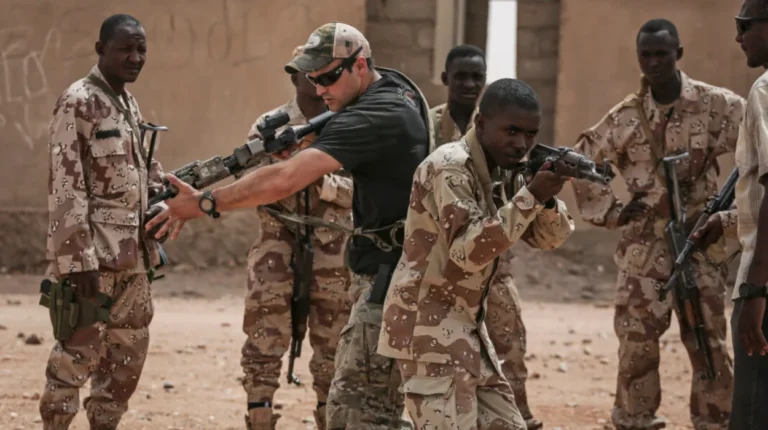
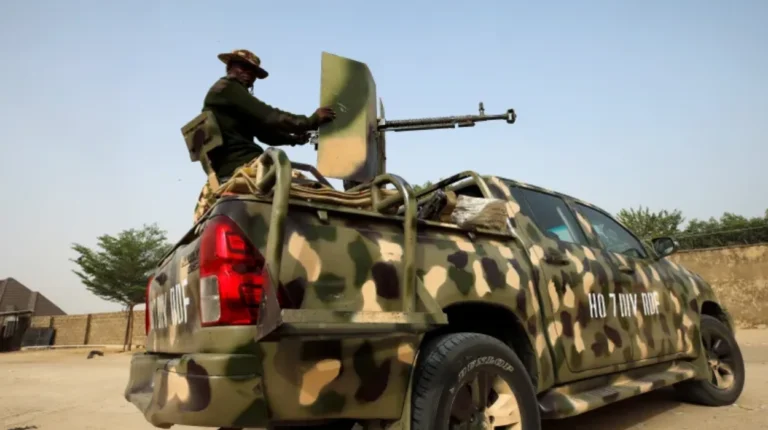
A central component of the agreement involves non-lethal equipment transfers designed to improve Ghana’s border monitoring capabilities. Surveillance drones and counter-drone systems are intended to track movements across remote border zones, while motorcycles and rapid-deployment equipment aim to enhance patrol mobility in difficult terrain. Electronic warfare tools and explosive ordnance disposal vehicles address the growing threat posed by improvised explosive devices and evolving insurgent tactics.
These capabilities reflect a broader effort to modernize Ghana’s security infrastructure as threats become more technologically adaptive. Since 2024, militant groups operating in the Sahel have increasingly used drones and digital communications to coordinate attacks, forcing neighboring states to invest in new forms of countermeasures.
Funding Structure and Accountability
The reimbursement-based funding structure distinguishes the pact from many previous assistance programs. Rather than direct cash transfers, Ghana receives financial compensation for approved expenditures tied to equipment procurement and operational improvements. European officials have described this approach as a way to reduce corruption risks and ensure that aid translates directly into measurable capacity building.
At the same time, the model subtly aligns Ghana’s procurement patterns with European export frameworks, a factor that has prompted discussion among analysts about long-term strategic implications.
The Security Landscape in West Africa
The €50M EU Aid to Ghana agreement must be understood against the backdrop of a rapidly deteriorating security environment across West Africa. By 2025, the region had experienced a surge in militant activity linked to groups affiliated with al-Qaeda and the Islamic State network. The Sahel accounted for the majority of attacks, but the strategic concern for regional governments has been the gradual expansion of these networks toward coastal states.
Organizations monitoring regional security trends noted that attacks across the broader Sahel and adjacent regions reached hundreds of incidents during 2025 alone. The shift signaled not merely a continuation of insurgency patterns but a geographic transformation that now places countries like Ghana, Togo, and Benin closer to the frontline.
Cross-Border Pressures on Ghana
Ghana’s northern border with Burkina Faso has become an area of particular concern. Instability in Burkina Faso, following political upheavals and weakened regional security coordination, has created conditions in which militant groups operate with relative freedom across remote territories. Cross-border raids and ambushes on traders in late 2025 illustrated how economic activity and civilian mobility are increasingly vulnerable to violence.
Security analysts in Accra have described the threat as a transitional phase rather than a full insurgency inside Ghana. However, the risk of infiltration and recruitment within border communities has prompted authorities to adopt preventative strategies, including deeper international cooperation.
Regional Spillover and Coastal Defense Strategy
Neighboring states such as Togo and Benin have reported similar patterns of militant activity moving southward. The emergence of this coastal pressure has led policymakers to frame Ghana as a potential stability anchor for the Gulf of Guinea. Strengthening Ghana’s surveillance and intelligence capacity therefore carries implications not only for national security but also for regional defense coordination.
Strategic Benefits for Ghana and the European Union
Supporters of the partnership argue that the €50M EU Aid to Ghana initiative enhances the country’s ability to secure its territory without requiring large-scale foreign deployments. Improved surveillance capabilities allow Ghanaian forces to monitor remote border zones and detect movements earlier, potentially preventing attacks before they escalate.
From a European perspective, the arrangement aligns with broader efforts to address instability at its source. EU officials have increasingly framed Sahelian and West African security challenges as interconnected with migration patterns, maritime safety, and economic partnerships linking Africa and Europe.
Intelligence Cooperation and Cybersecurity
One notable aspect of the partnership involves intelligence sharing and cybersecurity cooperation. Militants in the Sahel have increasingly relied on digital communication networks for recruitment and coordination, making cyber defense a growing priority for regional governments. EU technical assistance in this area could help Ghana develop capabilities that go beyond conventional military responses.
Joint exercises and training programs are also expected to improve interoperability between Ghanaian forces and international partners. Over time, such cooperation could expand into broader regional initiatives if neighboring states pursue similar agreements.
Ghana’s Emerging Regional Role
The pact also strengthens Ghana’s diplomatic standing within West Africa. As traditional regional security structures have faced strain in recent years, Accra has attempted to position itself as a stabilizing actor capable of bridging divides between Sahel states and coastal economies. A successful implementation of the EU partnership could reinforce this role and encourage new forms of security cooperation in the region.
Dependency Concerns and Strategic Autonomy
Despite these potential benefits, critics have raised questions about whether the €50M EU Aid to Ghana agreement might deepen long-term dependence on European suppliers and frameworks. Defense procurement relationships often extend beyond initial equipment delivery, involving maintenance contracts, training programs, and technological compatibility requirements.
Some analysts caution that aligning closely with European systems could limit Ghana’s flexibility to diversify partnerships with other defense suppliers, including emerging players offering alternative equipment packages with fewer regulatory conditions.
Procurement Dynamics and Long-Term Costs
The reimbursement model, while designed to promote accountability, may also reinforce procurement pathways that favor EU-approved technology. Over time, lifecycle costs associated with maintenance, upgrades, and interoperability standards could shape Ghana’s defense planning in ways that are not immediately visible during the initial aid phase.
Such dynamics are not unique to Ghana; similar patterns have emerged in previous security partnerships across Africa and other regions where external support gradually influenced defense procurement ecosystems.
Domestic Political Debate
Within Ghana, discussions about sovereignty and economic independence occasionally intersect with debates over foreign security assistance. Following economic adjustments and debt restructuring discussions that continued into 2025, opposition voices have argued that new partnerships must be carefully balanced with national priorities and regional autonomy.
While government officials emphasize that the pact strengthens national capacity rather than replacing it, the debate reflects broader questions about how African states manage security cooperation in an increasingly multipolar international system.
Geopolitical Implications of the Partnership
The €50M EU Aid to Ghana initiative also signals a broader recalibration in European foreign policy. After several years of shifting global priorities, the EU has moved toward more proactive engagement in African security environments, particularly in areas where instability could affect international trade routes and migration corridors.
Selecting Ghana as the first African partner under this framework underscores the country’s reputation for political stability and its strategic location along the Gulf of Guinea. At the same time, the move carries geopolitical implications as external actors compete for influence across the region.
For Ghana, deeper cooperation with Brussels enhances access to advanced capabilities without formal defense alliances. Yet the arrangement inevitably attracts attention from other global players observing how security partnerships reshape regional alignments.
As militant networks adapt their strategies and regional governments seek new security frameworks in 2026 and beyond, the effectiveness of this initiative will depend on how well equipment transfers, intelligence cooperation, and political trust translate into lasting stability. The evolving balance between capacity building and strategic independence may ultimately define whether the partnership becomes a model for future cooperation or a case study in the complexities of modern security diplomacy.