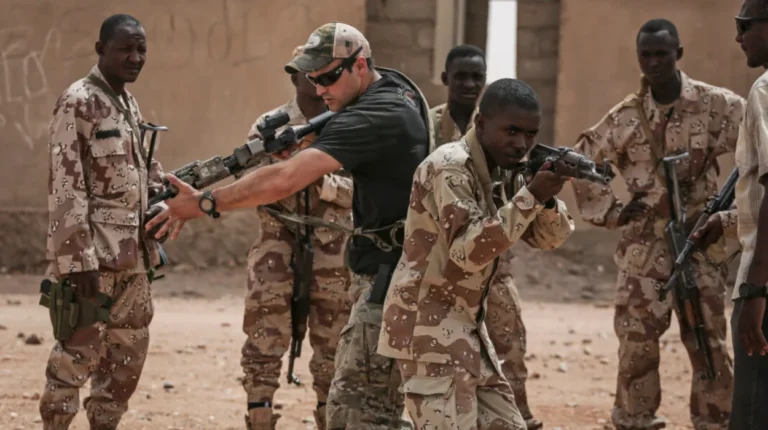
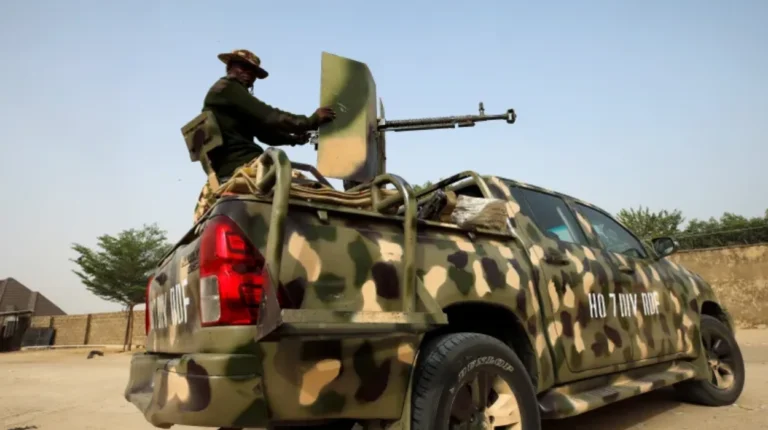
Morocco’s announcement that it dismantled an ISIL-linked cell planning an attack tied to the Sahel underscores how deeply the region’s insurgent networks now reach beyond their core territory. The case is significant not only because authorities say they stopped a plot in time, but also because it reflects the growing concern in Rabat that instability in the Sahel is no longer a distant problem. It is increasingly being treated as a direct security threat to Morocco itself.
A foiled plot with cross-border implications
Based on the information available from the Moroccan counter-terrorism forces, the raid led to the detention of 10 individuals in joint raids. In addition, the authorities stated that the cell had links to the Sahelian division of the Islamic State and was planning an attack that was at the advanced stages of preparation. This is important since the level of preparedness shows that the cell had progressed from merely recruiting people to the actual plans to launch an attack. The seizure list reveals the nature of the alleged threat posed by the cell. According to the officials, they managed to recover weapons with blades, military clothing, manuals on how to make bombs, digital equipment, chemicals, and a vehicle modified for use in an attack. Furthermore, they found butane gas cylinders and pressure cookers containing nails with electrical wiring.
Why Morocco sees the Sahel threat differently
For a while now, Morocco has been concerned about terrorism in the Sahel. The intelligence and judicial arms of Morocco have always seen the Sahel as an area from which terrorist groups can carry out recruitment, training, planning, and inspire attacks beyond just the theater of operations in the immediate area. This point came across yet again in this particular incident, whereby the officials connected the dismantled cell with the Islamic State group operating in the Sahel rather than seeing it as being part of a single incident in the country alone. This is significant given the fact that the Sahel region is currently one of the most insecure in the world for terrorists. There have been increased activities by both the Islamic State and al Qaeda affiliates in Burkina Faso, Mali, and Niger. The insecurity has even gone beyond the Sahel to North and West Africa as a whole.
That is why the Rabat authorities are likely to treat this case as both a tactical success and a strategic warning. The tactical success is the prevention of a potential attack. The strategic warning is that Morocco sees the architecture of jihadist violence in the Sahel as capable of projecting into its own urban and security environment.
What officials said and implied
The comments coming from Moroccan authorities about this particular arrest were clear and unambiguous as far as the nature of the operation went. Authorities said that the move was meant to prevent the cell from moving forward with its intentions, adding that the suspects were involved in the planning stages of a future operation. In simple terms, this language means that Moroccan authorities considered this to be a serious threat that was very near and developed enough for a major counterterrorism operation. The most important message that came out of this was the fact that this cell was associated with the Islamic State in the Sahel. This is not a coincidence. By using such language, Moroccan authorities put this case into the larger context of the international terrorist movement.
The authorities did not present the case as a symbolic arrest operation. Instead, they highlighted the operational details of what was found, which indicates they wanted to demonstrate the seriousness of the threat and the precision of the intervention. In counterterrorism reporting, this kind of disclosure often serves two purposes: to justify the arrests legally and to communicate deterrence publicly.
The significance of the seized materials
Perhaps the most informative pieces of evidence obtained in the course of the raids include bladed weapons, military-like clothing, bomb-making literature, chemicals, modified containers that could be used for building explosive devices, pressure cookers with nails in them, and the vehicle alleged to have been modified. Pressure cookers fitted with nails are particularly terrifying as they imply the intention to kill people by shrapnel. The vehicle modification is another interesting piece of information. Nowadays, vehicles may be used not only for ramming people but also for delivering the explosive device and carrying the necessary materials. Without having any information about the potential target of the attack, it can be claimed that terrorists were capable of launching an extensive attack.
From a journalistic standpoint, the most important takeaway is that Moroccan authorities are describing a cell that appears to have been in the final phase of operational readiness. That makes the case more serious than a basic online propaganda or recruitment investigation. It suggests physical infrastructure, planning discipline, and access to material resources.
What this says about Morocco’s security posture
Morocco’s counterterrorism model has often been praised for combining intelligence gathering, judicial coordination, and rapid interdiction. This case fits that pattern. The use of coordinated raids across several cities indicates not only surveillance and intelligence penetration, but also an institutional readiness to move quickly once the threat reaches a certain threshold.
The Moroccan state is likely to use this case to reinforce confidence in its domestic security apparatus. At the same time, it will probably highlight the transnational nature of the threat to justify stronger regional vigilance. The message is clear: Morocco sees itself as a frontline state in a broader contest against Sahel-based extremism.
This matters politically as well as operationally. Counterterrorism successes help the state project control and competence, especially at a time when militant movements in neighboring regions remain active. They also support Morocco’s long-running diplomatic effort to present itself as a stable security partner for Europe, Africa, and the wider international community.
The broader regional pattern
This is not the first time that the Moroccan government has made such a pronouncement about the breakup of a cell in relation to the Islamic State in the Sahel. In earlier reports, there have been other pronouncements in which arrest, weapons seizure, and foiled plans have occurred. This repetition of events is indicative of a stream of threat that is being observed, not just an isolated one. The consistent mention of the Sahel in such instances indicates a wider trend in relation to geography of extremism. There has been a transformation of this region into a region that exports security threat, with the exportation of extremist ideas, networks of allegiance, and operations into neighboring countries.
This cross-border dimension is what makes the current case especially important. It is not only about a cell operating inside Morocco. It is about the connectivity between a fragile militant theater in the Sahel and the possibility of violence in North Africa’s more stable states.
Why the timing matters
The timing of the announcement adds to its significance. When authorities say they have disrupted a cell before an attack, they are not only reporting a security success; they are also signaling the immediacy of the threat environment. In practical terms, it means the authorities believed the plot was close enough to execution that delay could have had deadly consequences.
That is one reason the phrase “advanced stage of preparation” carries such weight. It suggests that investigators did not encounter a vague or hypothetical plot. They confronted a case where materials, ideology, and intent had already converged. In security reporting, that places the incident among the more serious categories of domestic terror prevention.
The public release of details about the seized items also appears intended to reassure the population while warning potential sympathizers. By showing what was recovered, authorities reinforce the message that the state is active and alert, while also demonstrating the consequences of militant preparation.
A warning beyond Morocco
The broader lesson from this case is that the Sahel’s insurgency is now a regional and international security issue. Morocco’s announcement demonstrates that the effects of instability in the area can be felt far from the immediate conflict zone. That matters for North Africa, Europe, and international counterterrorism cooperation more generally.
For Morocco, the immediate achievement is prevention. For the region, the case is another reminder that extremist networks remain adaptive, mobile, and willing to exploit weak security environments. For observers, it highlights a reality that is becoming increasingly difficult to ignore: the Sahel is not just a local crisis zone, but a generator of wider security threats.