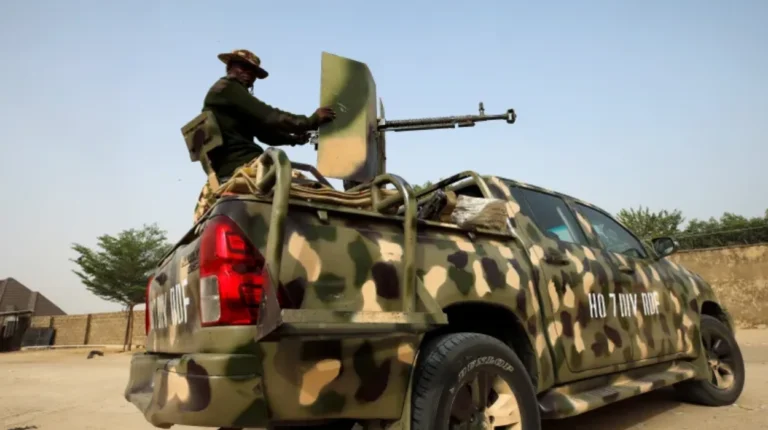
As a clear indication of the re-emergence of a security-oriented policy by the Washington administration in Africa, the US government has offered military equipment valued at $2.3 million to support the counter-terrorism operations of Niger against the jihadist forces operating within the unstable region of the Sahel. As indicated in press releases from the U.S Embassy in Niamey, the military aid consisted of nine boxes containing uniforms, protective clothing, and medicines.
However, the timing of such a grant is especially sensitive from a political perspective. The government in Niger, like those of many other neighboring countries in the Sahel region, has been established through military rule following a 2023 coup, posing long-standing concerns regarding the requirements of security collaboration between Washington and countries that adhere to democracy norms. Nevertheless, the US government chose pragmatism over politics in this regard.
Strategic Shift in U.S. Sahel Policy Under the Trump Administration
Having been sworn into office again in January 2025, the Trump administration’s foreign policy agenda now focuses on the threat of jihadism in Africa. The $2.3 million grant is an example of how this new strategy works. In contrast to past years, when aid was often withheld in response to coups and human rights issues, this year sees an emphasis on “security cooperation first,” according to unnamed senior officials from the United States.
“We are focused on one thing: stopping the spread of terrorist networks that threaten American interests and regional stability,”
said a senior State Department official involved in the Sahel file.
“Niger remains a critical partner in that effort, regardless of who sits in Niamey’s presidential palace.”
This represents a move away from the cautious approach during the Biden era, whereby there was a notable decrease in military aid due to the coup that occurred in 2023. The Trump administration has continued to engage through the recognition of the existence of the jihadist organizations in the region as posing an existential threat beyond any discussions about governance.
What’s Inside the $2.3 Million Package?
The donated equipment is not heavy weaponry or advanced surveillance systems. Instead, it consists of foundational field gear essential for frontline troops operating in the Sahel’s harsh desert and savanna terrain. The nine containers include:
- Tactical uniforms designed for extreme heat and dust
- Body armor and helmets for infantry protection
- Field medical kits and trauma supplies
- Boots, backpacks, and cold-weather gear for night operations
These may not necessarily be very powerful weapons, but they serve a vital purpose. Soldiers in Niger have been deployed without proper clothing and lacking adequate medical aid; therefore, they are not fit for long-term deployment. According to the United States Embassy in Niamey, the equipment is going straight to troops fighting against terrorism in western and southern Niger.
“This equipment will save lives—both soldiers’ and civilians’—by improving protection and medical response on the battlefield,”
said Colonel Amadou Diallo, a spokesperson for Niger’s Ministry of Defense.
“We thank our American partners for understanding our reality on the ground.”
The choice between basic equipment and more advanced equipment shows a combination of practicality and diplomacy. The use of heavy weaponry or even drones may invite international criticism from organizations such as ECOWAS, and may even be perceived as a breach of sovereignty. However, basic things like uniforms and medical supplies cannot raise any diplomatic issues.
Niger’s Counterterrorism Battleground: Why This Matters
Niger sits at the epicenter of the continent’s most violent jihadist insurgency. Niger neighbors Mali, Burkina Faso, Nigeria, and Libya, providing the perfect geography for AQIM, ISIS-Sahel, and Boko Haram to collaborate more effectively. As noted by the Global Terrorism Index, in 2025, there were more than 5,000 deaths from terrorism-related attacks in the Sahel area, with Niger accounting for nearly 30% of these fatalities.
The Nigerien military has become overstretched. Having expelled French troops from the country in 2024 and breaking ties with American special forces stationed in Agadez, Niger’s junta has failed to sustain its counterterrorism efforts. Although small in scale, the U.S. assistance helps to cover the vacuum left by this transition period. Moreover, the assistance demonstrates that America is not completely abandoning its ally Niger.
“Niger is not just fighting for itself; it’s holding the line for the entire Sahel,”
noted Dr. Fatima El-Mansouri, a Sahel security analyst at the Chatham House Africa Programme.
“If Niger collapses, the extremist wave will sweep into Nigeria, Chad, and beyond. That’s why the U.S. is stepping back in, quietly but decisively.”
The timing is also strategic. With Russia’s Wagner Group (now rebranded as Africa Corps) expanding its presence in Mali and Burkina Faso, Washington fears losing Niger to Moscow’s orbit. The $2.3 million donation is a low-cost way to keep Niamey engaged with Washington while avoiding the political baggage of a large-scale military presence.
Controversy and Criticism: Governance vs. Security
There has been criticism of this assistance plan. Human rights organizations and certain politicians have been concerned about the possibility of military aid being supplied to a government that seized power through a coup and is known for oppressing dissidents. There is an existing law called the Leahy Law, which bans the provision of U.S. military aid to human rights violators, yet the State Department apparently granted exceptions for this particular shipment.
“We cannot ignore the reality on the ground: terrorists are killing civilians by the thousands,”
argued Senator Mark R. Warner (D-Va.), chair of the Senate Intelligence Subcommittee on Africa.
“But we also cannot pretend that arming authoritarian regimes won’t have consequences. This is a difficult balance, and we must monitor closely how this aid is used.”
Conversely, security hawks in the Trump administration argue that such concerns are secondary to the immediate threat of jihadist expansion.
“Democracy is a long-term goal, but terrorism is a short-term emergency,”
said former Pentagon official Robert K. Aquino, now a senior fellow at the Heritage Foundation.
“You don’t wait for perfect governance to stop a bullet. You act now, and fix the politics later.”
This tension reflects a broader debate in U.S. foreign policy: whether security cooperation should be conditional on democratic norms or driven by immediate strategic imperatives. The Trump administration has clearly chosen the latter in the Sahel—and Niger is the test case.
Regional Ripple Effects: What This Means for the Sahel
The resumption of financial aid by the United States towards Niger has the potential to impact surrounding countries. The neighboring nations of Mali and Burkina Faso, both under military governments and currently associated with Russia, see U.S. offers of help as merely “imperialist interference.” However, there are rumors emanating from their security agencies that they might pursue a similar quiet approach should terrorist attacks persist. ECOWAS, having imposed sanctions against Niger following the coup last year, has recently toned down its rhetoric. This is because it is well aware that the region’s security problems might spin out of control without outside assistance.
“The Sahel is a regional problem that requires regional solutions, but no African country can fight this alone,”
said ECOWAS Commission Chair Omega Taslim.
“We welcome any responsible external support that strengthens our collective security, as long as it respects sovereignty and human rights.”
The U.S. aid package may also influence China’s approach. Beijing has been cautious about military involvement in Africa, preferring infrastructure and economic diplomacy. However, if the U.S. successfully stabilizes Niger, China may feel pressured to increase its own security engagement to protect its growing investments in the region’s mining and energy sectors.
What Comes Next? Scaling Up or Stepping Back?
For now, the $2.3 million donation is a one-off package, not a commitment to sustained large-scale aid. U.S. officials have indicated they are evaluating whether to expand support with training, intelligence sharing, or limited advisory roles—but no final decisions have been made.
“This is a pilot, not a program,”
said a senior Defense Department official.
“We’re testing the waters to see if Niger can be a reliable partner again. If the relationship proves productive, we’ll consider deeper engagement. If not, we’ll pivot.”
The coming months will be critical. If Nigerien forces can demonstrate improved operational effectiveness with the new gear—and if the junta shows signs of political moderation—Washington may consider a more robust partnership. If not, the U.S. could scale back again, leaving a vacuum that Russia or China might fill.