In a move that underscores the deepening security alignment between Israel and the United Arab Emirates, the Israeli military has deployed Iron Dome batteries and personnel to Emirati territory for the first time. Confirmation of the deployment came from U.S. Ambassador to Israel Mike Huckabee, who stated that
“Israel sent Iron Dome batteries and personnel to operate them to the United Arab Emirates to defend the country during the Iran war.”
This statement, given tersely but emphatically, changes the entire tone from that of a covert mission to one of open declaration on the emerging security situation in the region.
This movement takes place amidst a fragile cease-fire in the wider context of the Iran War, which is a multiple theatre war where Iran has fired as many as 2,500 to 2,800 missiles and drones towards targets in the Gulf region, with the UAE in its direct path. In such an environment, the move by Israel is a conscious one.
A First‑Time Overseas Combat Deployment
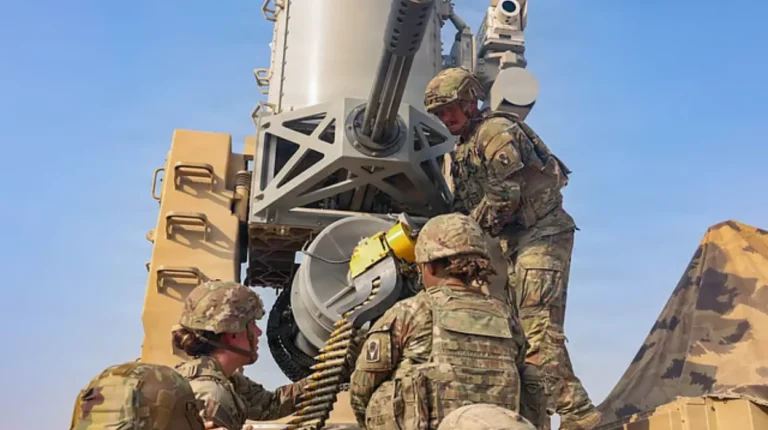
The unique aspect about this particular deployment is the fact that it marks the first time Iron Dome has left both Israel and the US to be deployed to a conflict zone in an active role. The previous instances in which Iron Dome was deployed elsewhere were either for tests and trials or military training purposes in collaboration with US troops, but in this case, Israeli troops have been placed right in the middle of a country that poses a threat. There has been news of one battery being set up in Emirati soil, together with “several dozen” Israeli troops.
Israeli policymakers have justified the decision as a response to the UAE’s appeal for help. According to the Israeli press, President of the UAE Sheikh Mohammed bin Zayed Al Nahyan contacted PM Benjamin Netanyahu during the escalation of Iranian missile-drone attacks, requesting urgent support to strengthen their air defense systems. This clearly indicates that the Abraham accords have transformed from being mere economic and diplomatic relations to a strategic defense alliance, with military equipment crossing the desert border.
Iron Dome’s Role in Countering Iranian Barrages
Operationally speaking, the reason behind the deployment is the scope and nature of the threat posed by Iran. There have been reports of Iranian forces launching up to 2,500-2,800 projectiles on the Gulf battlefield, which consists of ballistic missiles, cruise missiles, and combat drones in order to saturate the defensive capabilities of their enemies in the region. While originally developed to shoot down short-range rockets and mortars, Iron Dome has evolved to counter other kinds of threats as well.
Security experts in Israel point out that the battery itself has already been successful in some way in intercepting missiles fired by Iran towards Emirati airspace. It should be noted that Israel and the UAE did not provide any data on their achievements in intercepting projectiles or the number of interceptions, but in general, there is the idea that the presence of the Iron Dome has prevented the catastrophe for military bases and other critical infrastructure. Of course, some experts also say that the Iron Dome system cannot protect from missile salvos.
Nonetheless, the symbolic importance of the mission cannot be overemphasized, since it shows that not only does Israel have technologies for sale, but it also offers military know-how to become a partner of security in the Gulf region.
Beyond Iron Dome: The Emergence of an Integrated Defense Architecture
Iron Dome acquisition is not an individual deal but a part of a larger and multilayered defense system construction by Israel and the UAE. There are reports that apart from the acquisition of the Iron Dome anti-missile defense system, Israel has provided the UAE with the Iron Beam air-defense system, which utilizes lasers for shooting down UAVs, missiles, and any other target, and is considerably cheaper than other missile-based defense systems. Moreover, Spectro-type drones for detection purposes are reportedly already in use throughout UAE skies.
This stratified strategy can be seen as an intentional departure from the conventional buyer-seller dynamics. Through the incorporation of Iron Dome, Iron Beam, and drone detection systems within one air defense system, the UAE has essentially created a hybrid protection mechanism that blends the expertise and technology of Israel with the geography and command structure of the Emirates. The officials in Israel have reiterated that this process is purely for defensive purposes, focusing only on safeguarding civilians and critical infrastructure, but observers across the region have swiftly highlighted how it fortifies the UAE’s combat capabilities.
The Stakes for Israel and the UAE
For Israel, positioning the Iron Dome within the UAE will have both tactical and political significance. From a tactical perspective, it presents Israel with an avenue through which it can gauge the performance of its defensive missile shield in a setting distinct from the one prevailing in its airspace and against enemy missiles manufactured in Iran. On a political level, it strengthens the reputation of Israel as a dependable ally in matters of security by demonstrating its capacity to project military force beyond its boundaries.
The Israeli authorities have justified this development as a logical progression from the Abraham Accords, in which Israel and some Arab countries established normal ties in 2020. The diplomatic gestures and economic pacts that started off as an exchange of goodwill have been converted into security measures through the installation of the Iron Dome system. The essence of this communication from Jerusalem is that this security structure goes beyond bilateral cooperation and is part of a larger attempt to curb Iranian expansionism across the region.
Equally, the situation for the United Arab Emirates (UAE) is of similar importance. For instance, the presence of the Israeli air defense equipment serves to increase the chances of the nation being able to withstand any future attacks from Iran. However, the deployment also raises issues of sovereignty since, at the end of the day, the UAE will be hosting foreign troops within its borders. It should be noted that there have been no formal statements made by the UAE regarding the conditions of the deployment, but it can be assumed that there must have been some form of negotiation process involved.
The regional position of the UAE as a whole should also be taken into consideration. Being one of the most important players in Gulf affairs, Abu Dhabi has to consider the feelings of its fellow Arabs who continue to harbor fears about the possible Israeli military presence in the area. The introduction of Iron Dome becomes both a diplomatic and a military maneuver.
The United States’ Role and Regional Implications
The role played by the United States in this context cannot be overlooked, even though it does not have to be physically present in the process. The country has generally been in favor of increased cooperation between the Israeli and UAE armed forces, especially since they are considered vital in containing Iran’s presence in the Persian Gulf region. The remarks made by the ambassador highlight the fact that the US government is comfortable with this arrangement and shares common goals with the other two nations.
Besides, Huckabee’s statement indicates one more thing – America is ready to emphasize the role of cooperative security initiatives, despite the fact that its diplomatic attempts to secure stability in the region are still shaky. The ceasefire between Iran and other nations in the Iran war is referred to as a “shaky ceasefire” since there have been some violations in it from time to time. It appears that the Iron Dome being placed in the UAE is part of an overall initiative towards enhancing regional partners’ resilience.
However, the deployment is not without its critics. Some Arab and Muslim‑majority states have expressed concern about the growing integration of Israeli military assets into the Gulf, seeing it as a potential erosion of collective Arab sovereignty. For these actors, the visible presence of Israeli personnel and technology in an Emirati air‑defense network represents a red line, even if the stated purpose is defensive. Israeli officials have sought to downplay these concerns, emphasizing that the deployment is limited in scope and focused solely on countering Iranian threats.
A New Era of Regional Alliances
The introduction of the Iron Dome into the UAE signals a dramatic shift in the trajectory of the security dynamics of the Middle East. From what was a diplomatic effort geared towards economic cooperation, it is now clear that a security framework has been established, with the mobilization of military forces and the exchange of personnel being tangible signs of the establishment of a new order. It is noteworthy how the role of Israel as a security ally in the region continues to grow despite the changing dynamics in the Gulf due to the Iran war.
This situation has also prompted the speculation of the future direction of regional cooperation. Would the introduction of Iron Dome be followed by more agreements involving other Gulf nations such as Saudi Arabia or Bahrain? Would the coordination of the Israeli and Emirati military capabilities bring about the establishment of an even more sophisticated regional air defense system? All these questions are up in the air, but with the deployment of the Iron Dome, it can very well be expected that more cooperation will ensue.
Furthermore, the deployment highlights the dynamic nature of the Abraham Accords as a living, breathing entity rather than a fixed contract. The transition from normalization to military cooperation indicates an understanding of the regional security threats being faced, which cannot be solved by conventional state-centric methods. Through the use of Israeli technology, Emirati geographical position, and American backing, the three nations seek to construct a new approach to security that can adapt and withstand adversity.
The Broader Impact on the Iran War
In light of the Iran conflict, there are short-term and long-term consequences that are associated with the use of Iron Dome by UAE. Short-term consequences include protection from attacks by Iran through missiles and drones. As such, many lives and infrastructural damages can be saved, which can lessen the possibility of an intense retaliatory response from UAE to Iran, thereby ensuring stability in the conflict.
In the long run, the use of such an anti-aircraft system may also affect the strategy of Iran. The message which is sent to Iran through the use of an anti-aircraft defense system is that its attempts to take control of the sky through the use of missile and drone strikes may face more sophisticated and better defenses in response. However, whether such an event would occur is not certain at all.
In the meantime, however, this step entails certain dangers. The involvement of Israeli military equipment within the borders of the United Arab Emirates can become the cause for a negative reaction on the part of Iran, which will regard the operation as an attempt by Israel to counteract its regional dominance. As a result, there will be a risk of escalating the situation to such a degree that Iran decides to carry out some tests against the newly developed air defense system.
The Future of Gulf Security
Future considerations in this regard suggest that Iron Dome’s deployment in the UAE may serve as a blueprint for future security frameworks in the Gulf. With the ever-present and shifting Iranian menace coupled with the looming prospect of war against Iran, air-defense and the expertise therein are becoming increasingly relevant in terms of future security cooperation. This, however, is contingent on whether the three nations of interest can manage to cooperate, be transparent, and satisfy the interests of the wider regional community.
For the future, the deployment could also have implications for the overall security direction of the Middle East. The development of a new security structure, with Israel, the UAE, and the US at its core, could lay the foundations for a more peaceful future characterized by collaboration, not conflict. Yet such an outcome is far from assured, and many obstacles lie ahead.